Stretches
- Dynamic Stretching vs Static Stretching
- Swimmer specific stretches
- After Practice
- Wall Press – Chest Stretch
- Goal Post Squeeze
- Goal Post Rotation
- Straight Arm Swing
- Hamstring Streamline Stretch
- High Hurdle Streamline Stretch
- Cat – Cow
- Child’s Pose for Your Lower Back & Hips
- Arm stretches
- Leg swings
- Ankle circles
- Quadruped T-spine rotation
- Trunk rotation with leg crossover
- Kneeling hip flexor stretch
- Doorway pec stretch
- Lat stretch
- Elbow Pull for arm pit
- Wall Lean for your calves
- Pretzel Stretch for your buttocks
- Butterfly Stretch for Your Inner Thighs & Groin
- Model Pose for Your Laterals
Great warm-up stretches loosen up the muscles and get the blood flowing throughout the body.
Stretching can increase flexibility and improve the range of motion in your joints, helping you move more freely. And the flexibility you gain from stretching might protect you from injury.
In order to prevent injury, stretching is very important. When stretching, you should make sure you cycle through all parts of your body.
For each stretch, hold the position for 30 seconds, and repeat for both sides.
TODO
- https://www.mayoclinic.org/healthy-lifestyle/fitness/in-depth/stretching/art-20546848
- https://www.self.com/gallery/essential-stretches-slideshow
Dynamic Stretching vs Static Stretching
Dynamic stretching is a movement-based type of stretching. It uses the muscles themselves to bring about a stretch. It’s different from traditional “static” stretching because the stretch position is not held.
A study published in the Journal of Strength and Conditioning Research (Hough et al., 2009) discovered that dynamic stretches were notably more effective than static stretching at boosting muscle activation and improving vertical jump performance.
Another study published in the Journal of Sports Science and Medicine (Iwata et al., 2019) found that dynamic stretching significantly reduced passive muscle stiffness.
The research with leg swings and dynamic stretching is solid. One study titled “Acute Effects of Dynamic Stretching Followed by Vibration Foam Rolling on Sports Performance of Badminton Athletes,” showed that a dynamic lower body stretching routine significantly increased knee range of motion, jumping performance, and overall agility.
Combining dynamic and static stretching has been shown to be more effective for increasing range of motion than static stretching alone (Blackhurst et al., 2015).
Swimmer specific stretches
Proper strength training + stretching -> increased recovery + injury prevention + mobility and strength in the water
Ultimately, adding a well-rounded stretching routine to your swimming schedule doesn’t sound appetizing… Like yet another thing to worry about.
Which I understand. Swimming is a demanding sport that requires a lot of your time and effort, and the last thing most of us is more stuff to spend time on.
But, maximizing your time and effort means being able to swim with a functional range of motion, decreasing excess stiffness that can cause injury, and priming your body for peak performance each time you strap on your swim goggles.
Try out these stretches before and after your swim workouts and randomly when you have a couple of moments to do arm and leg swings over the day, and watch your swimming reach new heights.
These swimmer-specific stretches work those hard-to-reach muscles that are key to great swimming. Each stretch is designed to increase flexibility and mobility in your shoulders, hips, chest and legs. Working to stretch and warm up these key areas of the body will allow you to be more efficient in the water.
Stretching before swimming will make your swims more effective, help you swim with better technique, and reduce the likelihood of injury.
It adds some extra time to your workout, but incorporating stretching into your swimming routine is worth the effort. You have more to gain than just some extra flexibility. Well stretched muscle fibers lengthen, which creates more force when they contract. This causes the muscles to be more effective at pulling you through the water. Getting in a warm-up stretch also protects your body from pulls, tears and pains, especially in the neck, shoulders and lower back. These are key areas of potential injury for swimmers.
After Practice
Although many swimmers stretch before practice, it’s even more important to stretch afterward. When you’re done with your workout, take just a few minutes to stretch out your muscles. Think about it as a warm-down. Stretching after practice will help you loosen up, and let your body repair for your next workout. You’ll feel great for your next practice!
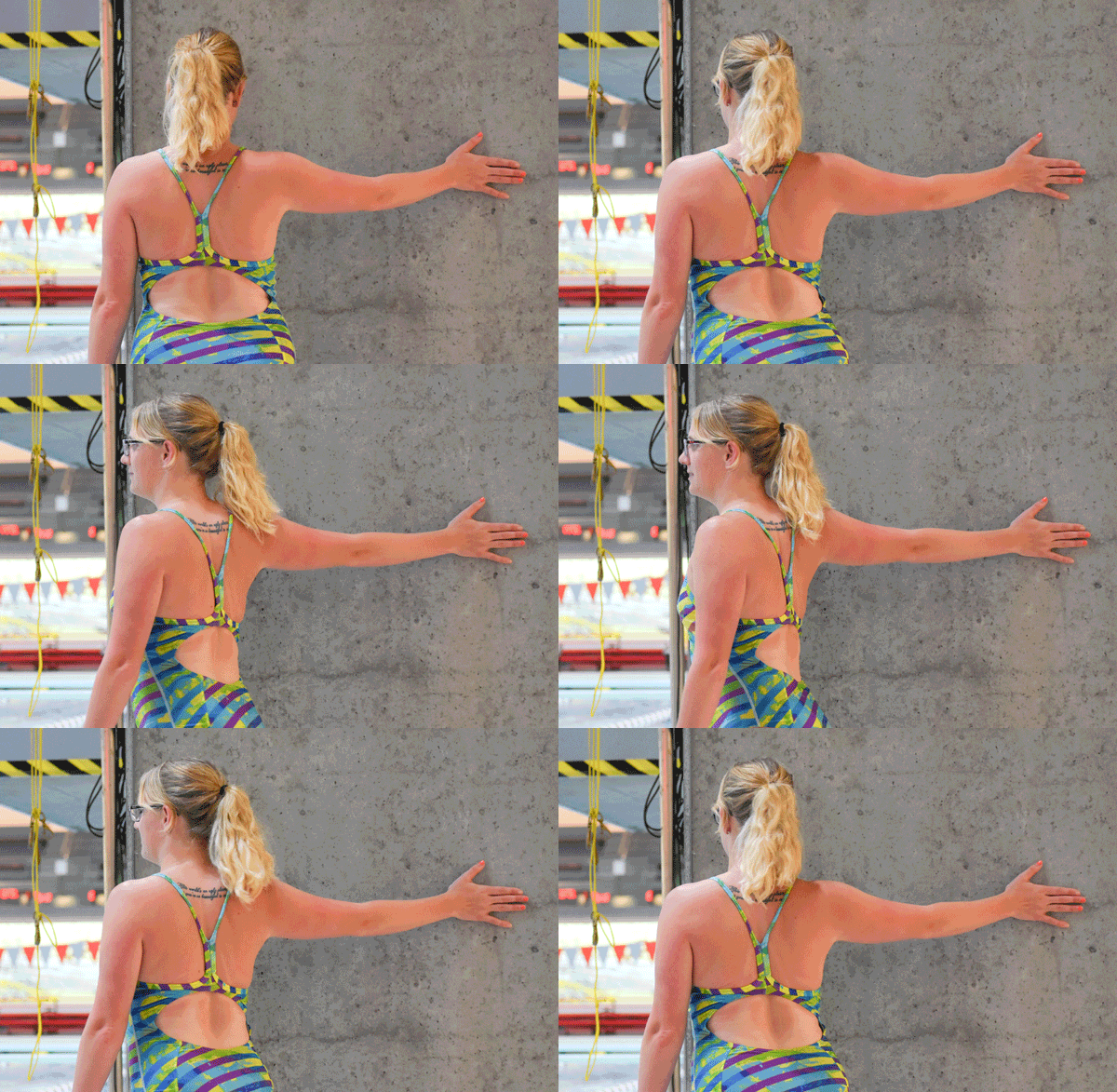
Wall Press – Chest Stretch
-
The most important muscles to stretch for swimmers, which continues to be overlooked, are the chest and shoulder muscles. These tend to get very, very tight. Stretching the back muscles can compound this tightness. “Wall Angles” will help to loosen chest muscles and should always be a part of a swimmer’s stretching regimen.
-
Begin by facing the wall and extending your arm to place your palm against the wall. Your thumb should point towards the ceiling.
-
Slowly rotate your torso away from your arm/wall until you feel the stretch in your chest and shoulders.
-
Hold for 15 – 20 seconds, keeping your palm firmly pressed against the wall. Then repeat this stretch on the other side.
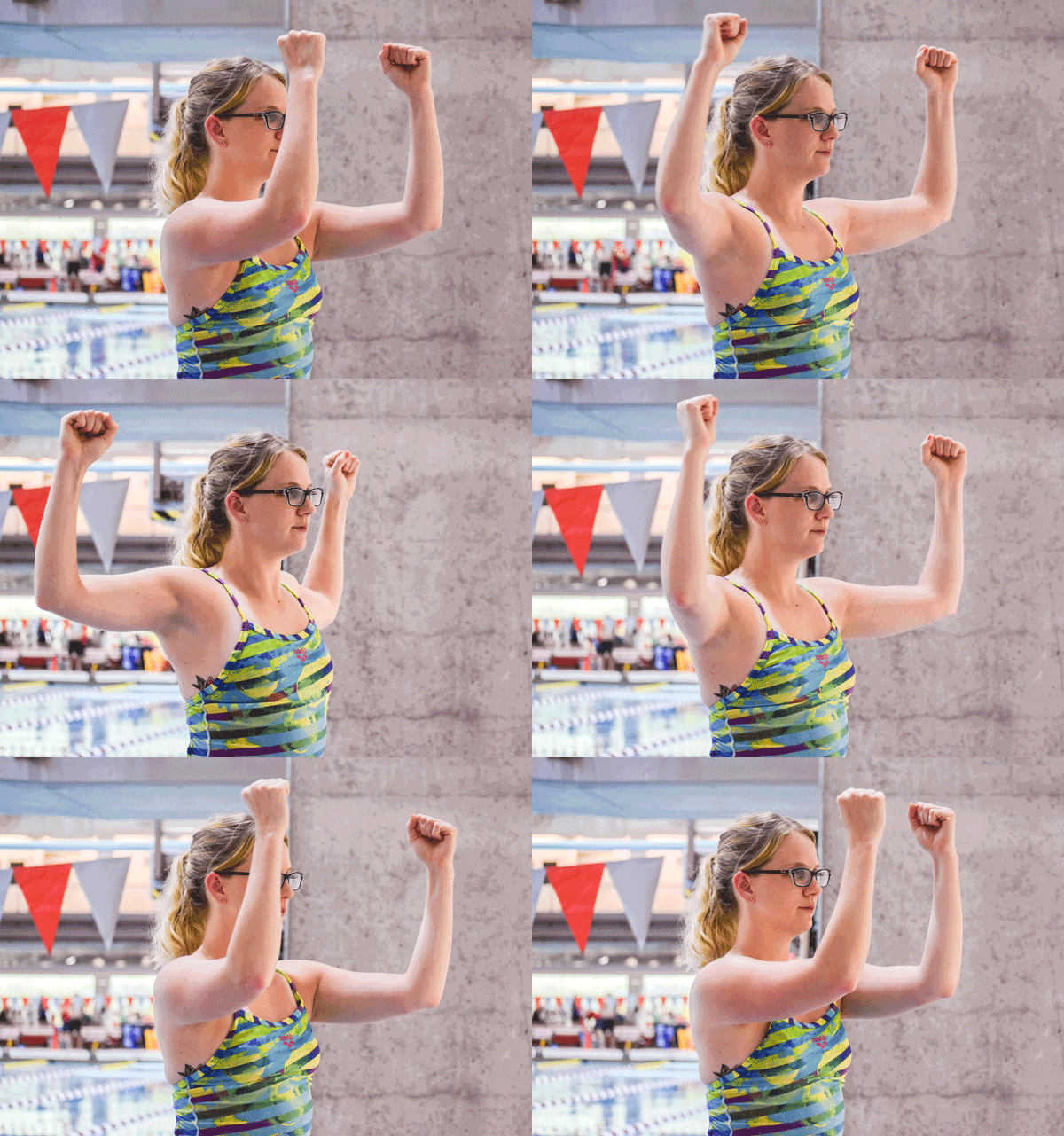
Goal Post Squeeze
-
Raise your arms in front of you with your elbows bent at a 90 degree angle.
-
Begin moving your arms back slowly, focusing on squeezing your shoulder blades together in the middle and maintaining a 90 degree angle.
-
Return to starting position and repeat 10 – 15 times.
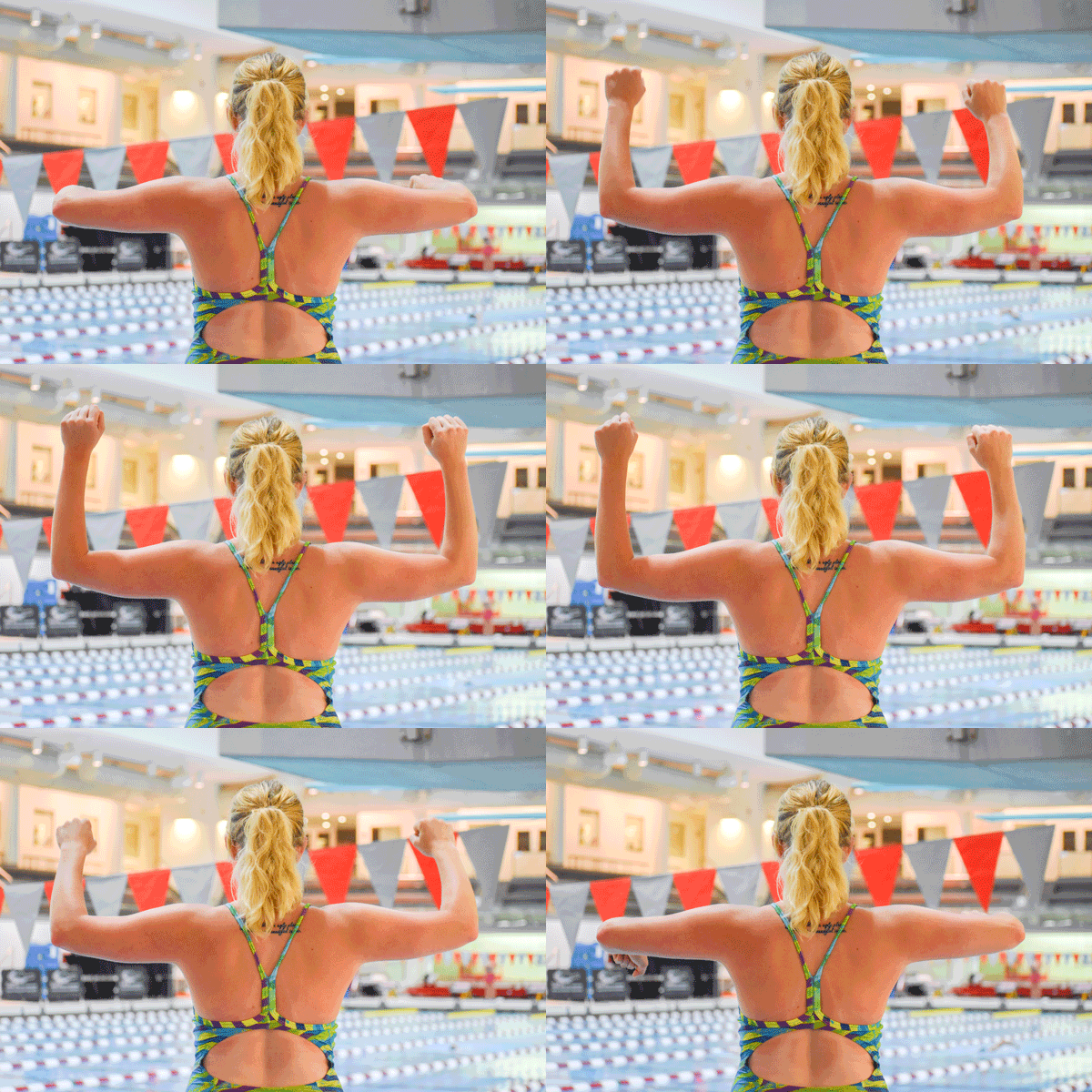
Goal Post Rotation
-
Raise your arms to your side with your elbows bent forward and in line with your shoulders at a 90 degree angle.
-
Rotate your arms up to the goal post position, without dropping your elbows below your shoulders.
-
Return to starting position and repeat 10 – 15 times.
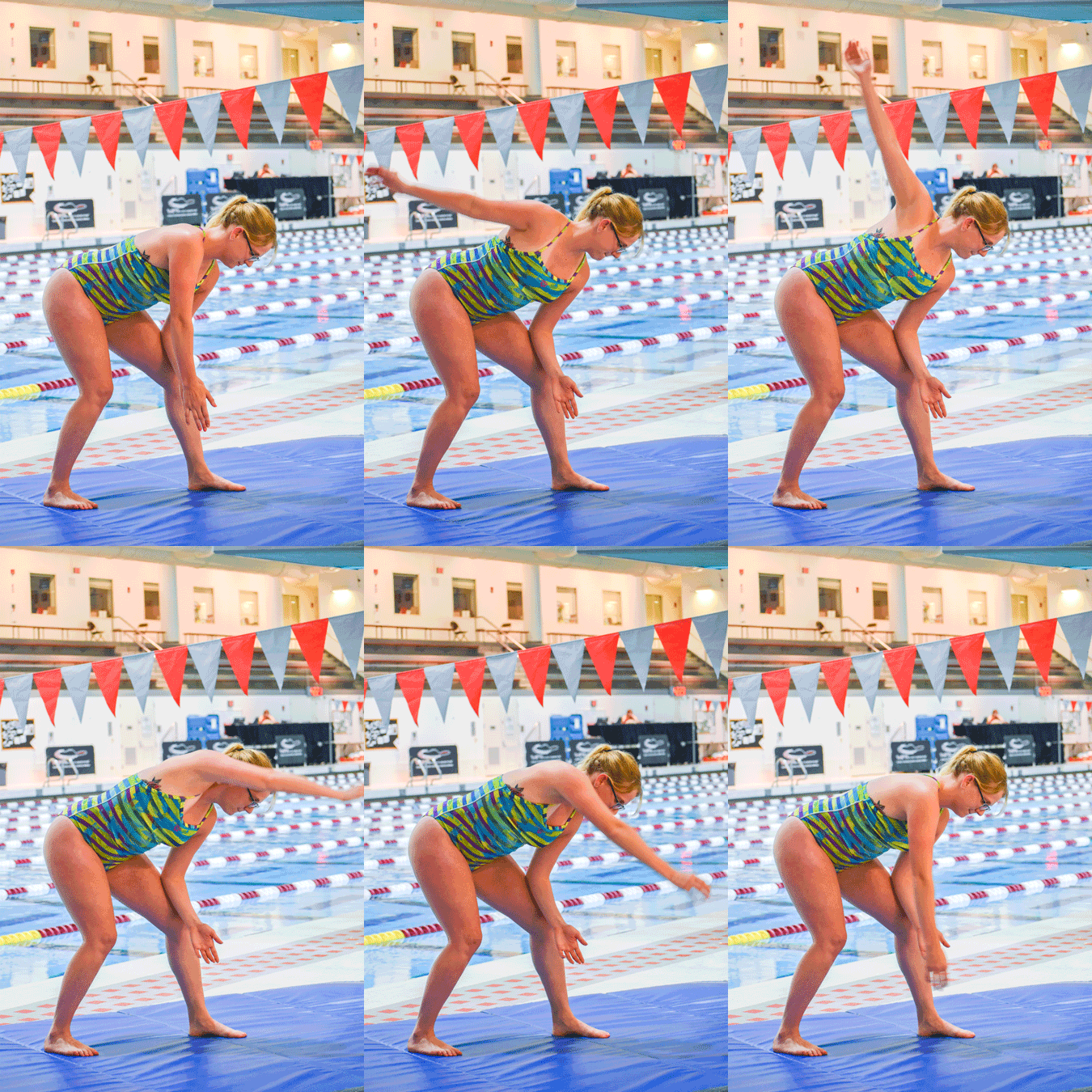
Straight Arm Swing
-
Begin in a standing position with one leg slightly more than shoulder width apart from the other. With your knees slightly bent, lower your head down and place your forearm above the knee of your forward leg.
-
Slowly rotate your opposite arm in a full circle to work the shoulder joint through its full range of motion.
-
Repeat for both arms, doing 25 swings on each side.
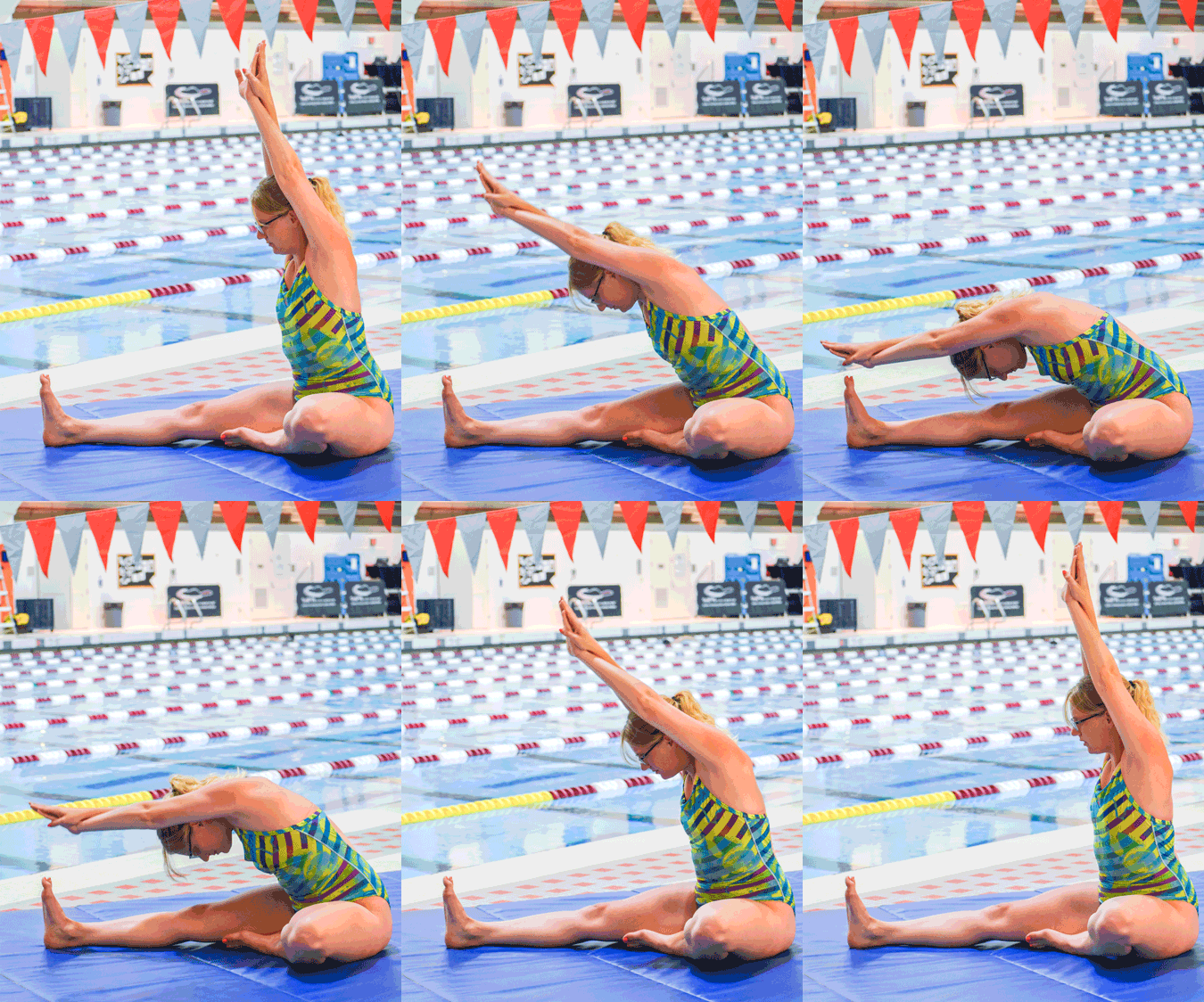
Hamstring Streamline Stretch
-
Begin in a seated position and extend one leg straight while the other is bent inward with your foot close to your leg. Keep the foot that is extended in a flexed position.
-
Bring your arms straight and tight to your head in a streamlined position. Hold this tall and with a flat lower back for 10 seconds.
-
Then, while pushing your hips back, reach for your foot/ankle to stretch your hamstring for 10 more seconds.
-
Repeat 5 times, then switch sides.
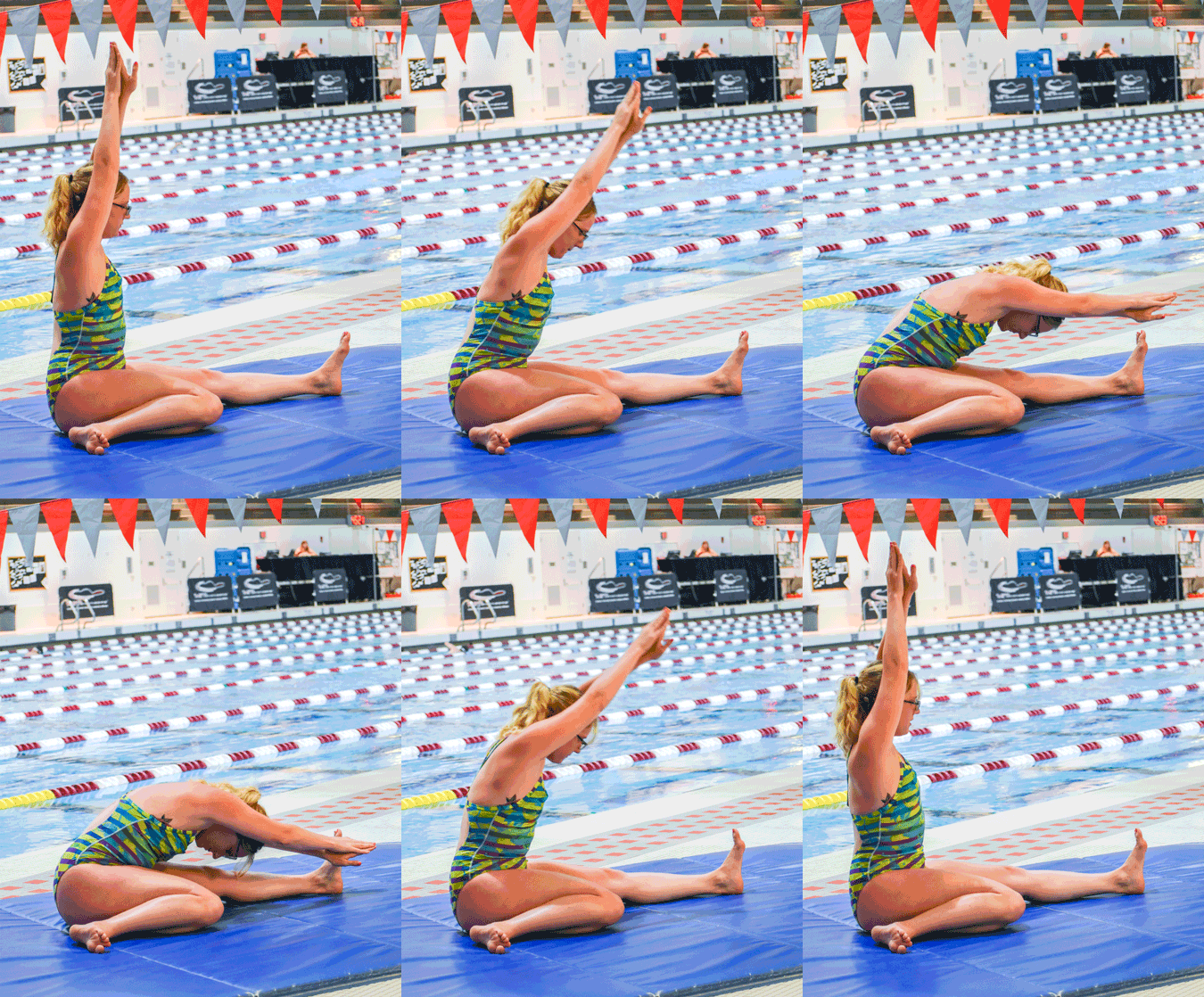
High Hurdle Streamline Stretch
-
Extend one leg straight while the other is bent backward, foot close to your buttocks. Keep the foot that is extended in a flexed position.
-
Bring your arms straight and tight to your head in a streamlined position, and hold this tall and with a flat lower back for 10 seconds.
-
Then come down to a quad stretch for 10 more seconds.
-
Repeat 5 times, then switch sides.
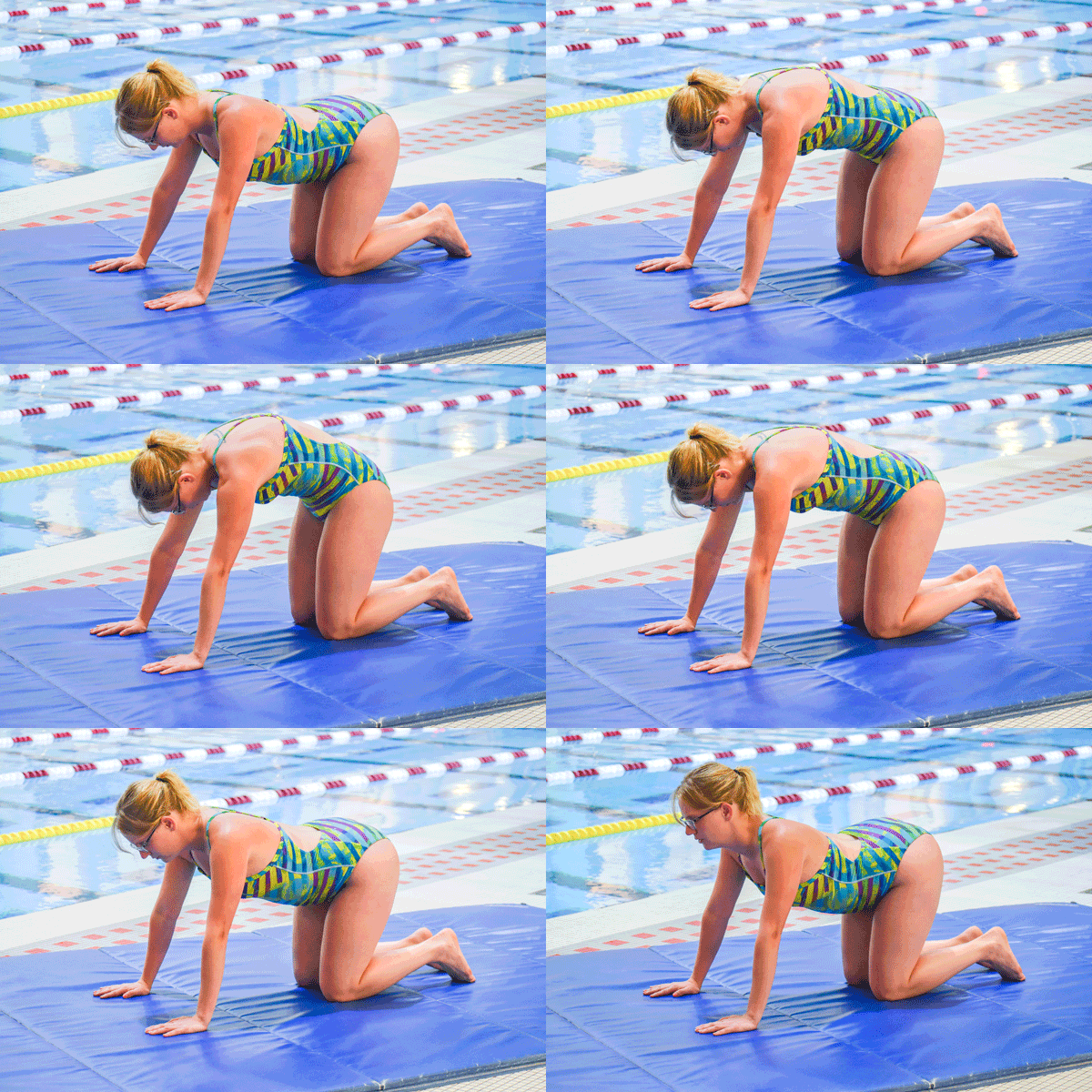
Cat – Cow
-
Start with your hands and knees on the floor in a tabletop position (knees are under hips, wrists under shoulders).
-
Begin in a neutral spine position, keeping your back flat and engaging your core. Take a big deep inhale.
-
As you exhale, round your spine up towards the ceiling, thinking about pulling your belly button up towards your spine, as well as pushing your shoulders up and away from the ground as you tuck your chest.
-
Inhale again, curving your back in and letting your belly relax while lifting your head and tailbone up towards the sky.
-
Repeat this at least 10 more times.
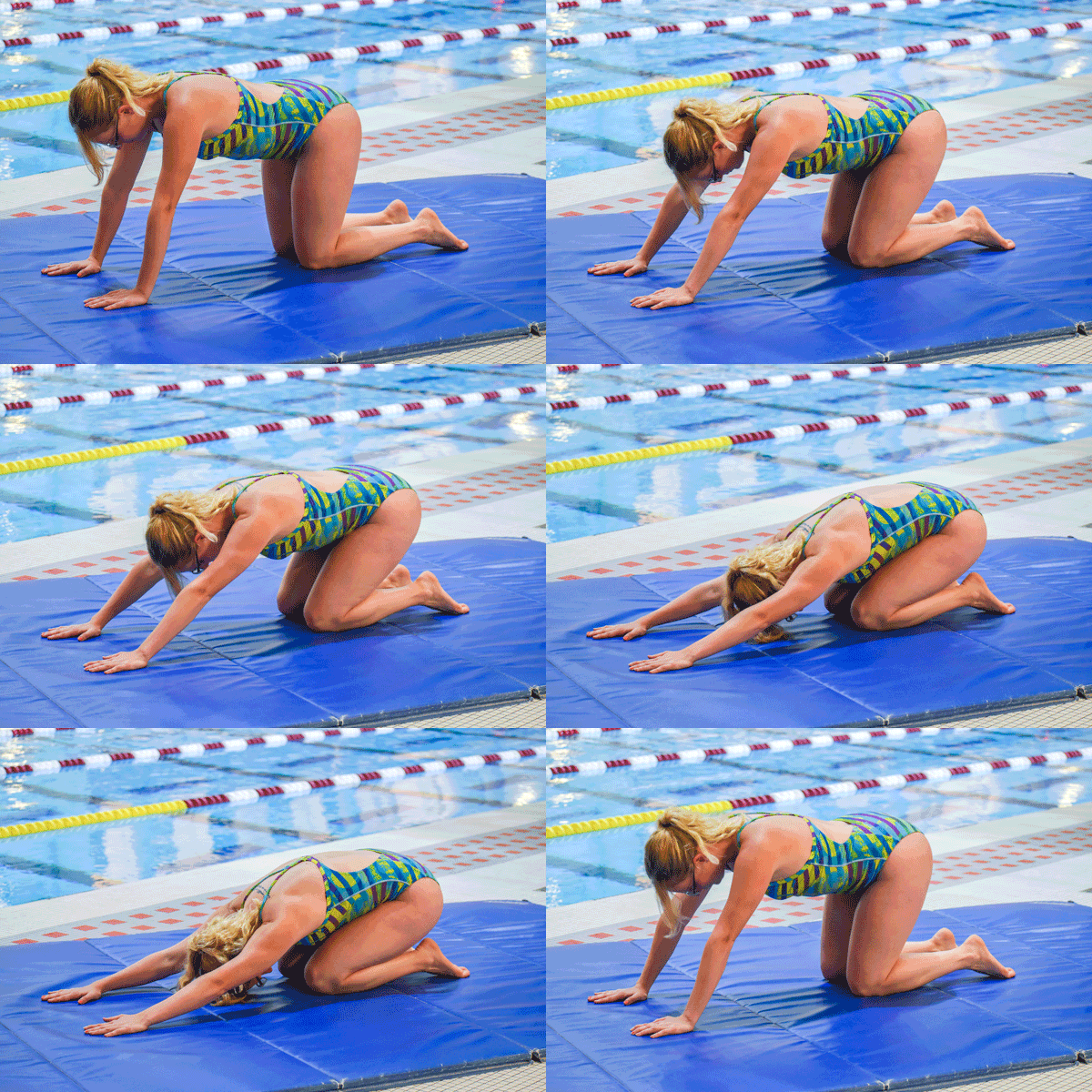
Child’s Pose for Your Lower Back & Hips
The child’s pose will feel so good after practice! Your lower back can feel increasingly sore after practice. This stretch does a great job of accessing those lower back and hip muscles. Follow these steps for a good child’s pose:
-
Kneel down so that your whole shin is touching the floor.
-
Touch your legs together.
-
Rest your thighs on your calves.
-
Lean over your thighs so your belly touches your legs.
-
Lay your forehead on the ground.
-
Stretch your arms out in front of you with your palms facing downward.
-
Hold this for 15 – 20 seconds.
-
You can stretch your arms to either side of your body to add a stretch in your side torso.
Arm stretches
- Arm swings, in all of their variations, improve the range of motion, increase blood flow, and activate the targeted muscle groups in the upper body.
- Arm swings are awesome for shaking loose stiffness, promoting blood flow to target muscles, and increasing range of motion while cranking up athletic performance.
Cross-body arm swings
- The classic, the O.G., the one you will see just about every swimmer doing behind the blocks before a big race or a big practice.
- Cross-body arm swings are dynamic stretches that open up the chest, shoulders, and upper back.
Starting with your arms extended out to the side, swing them together in front of you, arm criss-crossing, before swinging them backward.
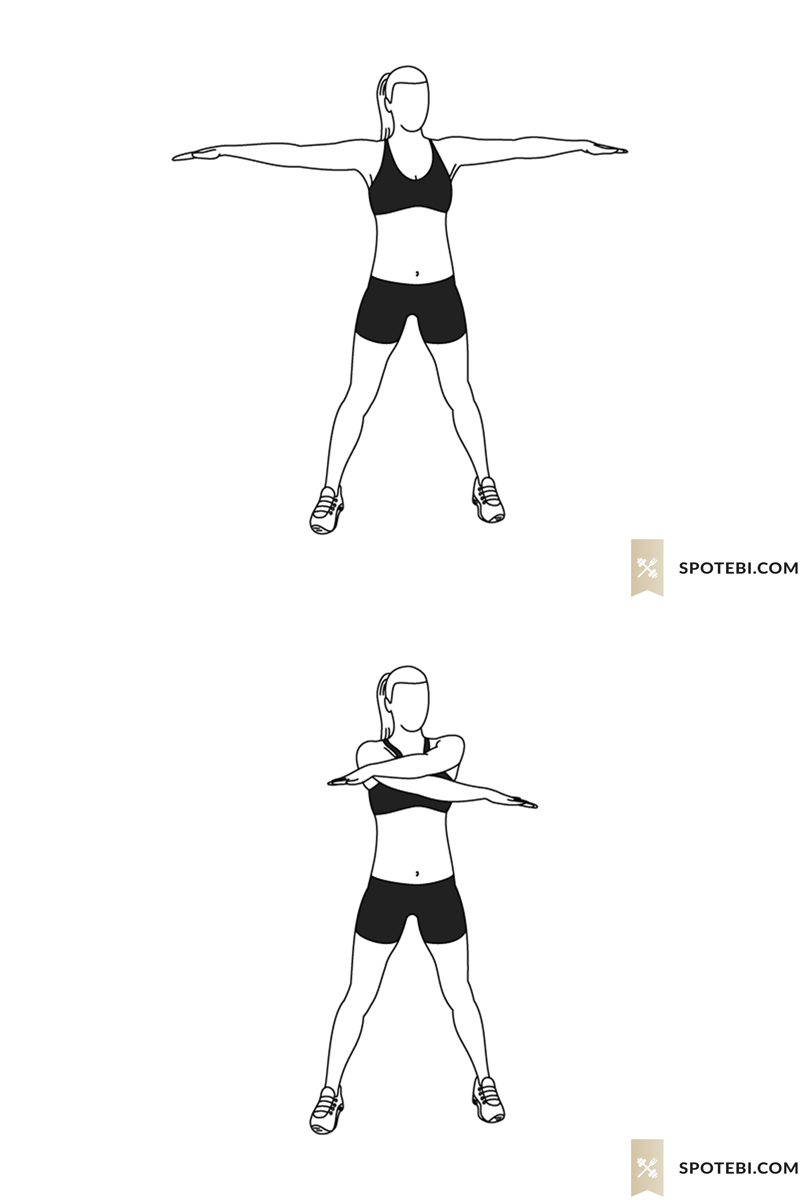
The most famous example of this stretch is Michael Phelps’s two-arm swing routine on the blocks (he is bent over when doing this; standing up and doing it is fine, too!).
Overhead arm swings
Standing straight, swing your arms side-to-side so that one arm crosses in front of you and the other reaches around the back of your head, touching the opposing shoulder.
TODO add image here
This stretch is excellent for swimmers as it loosens and opens up the lats and triceps, which tend to sit dormant over the day when not in the water.
Trunk swings
These arm swings are more of an upper body stretch, as they help open up your spine, trunk, and hips and mimic the side-to-side rotation freestylers perform in the water.
Extending your arms, swing them around to each side of your body, rotating the shoulders while keeping the hips stationary.
TODO add image here
Consider adding 20-25 repetitions of each before your next swim, and you’ll find it easier to reach further in the water, rotate more efficiently, and nail that early vertical forearm.
Leg swings
- Leg swings are another form of dynamic stretching that are perfect for swimmers to use either before swim workouts, or after long periods of sitting, or in the hours after a brutal swim workout, when you want to shake some of the rust and soreness out.
- Leg swings, like the arm swings earlier, promote blood flow to the hips and legs, priming them for a successful swim while increasing the overall range of motion.
Two good leg stretches swimmers should drop into their day-to-day training and recovery routine are leg swings from front-to-back and side-to-side.
Front-to-back leg swings
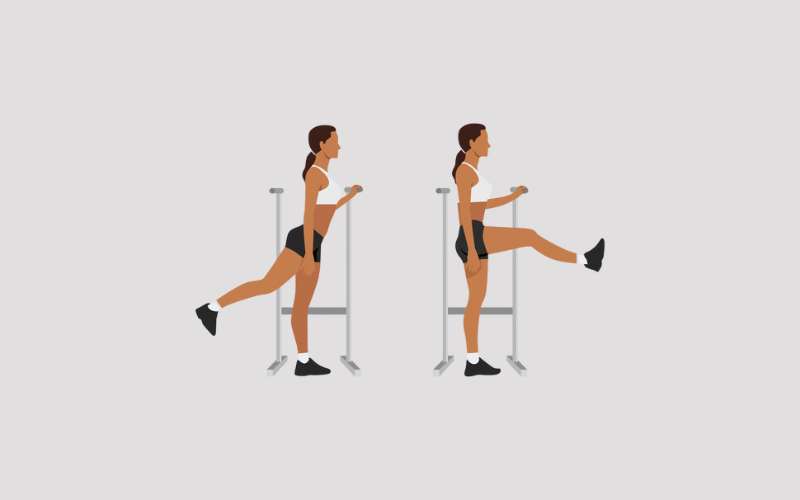
Front-to-back leg swings are particularly effective at loosening up the hip flexors, quad muscles, hamstrings, and groin.
Grab something to steady yourself with, slightly bend the stationary leg, and swing the other leg gently forward and backward.
You’ll find that even after just 7-8 swings, the leg will swing higher in both directions.
Side-to-side leg swings
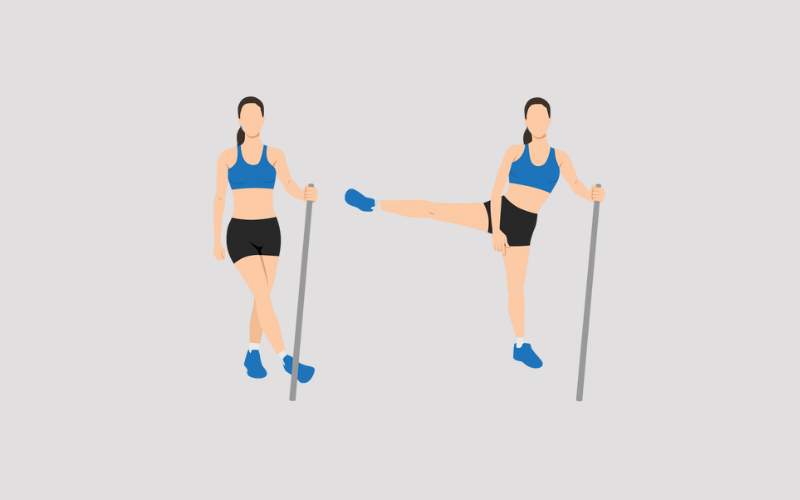
Side-to-side leg swings, also known as lateral leg swings, are excellent for opening up the hips, and inner and outer thighs.
Grab something sturdy to hold onto, position the swinging leg slightly in front of you, and swing out laterally. You’ll feel it, particularly in the outer thighs and hips, as the leg apexes as it swings outwards.
Swing the leg back in front of you and repeat as necessary.
Ankle circles
- Ankle flexibility is crucial for swimmers to be able to kick efficiently. The more flexible your ankle, the more water you can kick.
- A study published in the Journal of Strength Conditioning Research took members of the women’s University of Connecticut swimming team and assessed ankle flexibility, foot size, and vertical jump power.
- The thing that separated the good kickers from the great kickers?
Ankle flexibility - The swimmers with better ankle plantar flexion both kicked faster and swam faster.
There are a few ways swimmers can increase ankle flexibility. A very good way (that doesn’t require sitting on your ankles for “ankle rockers”) is the simple ankle circle.

Sitting or standing, extend your foot and point the toes. Using your toes as a pointer, draw the biggest circle you can without moving your ankle. Do 10-15 reps in each direction and switch foot.
I love the accessibility of this dynamic stretch for swimmers, which you can do anywhere, anytime.
Fun fact - We can do them at our desks as we work on other things.
Quadruped T-spine rotation
Swimmers are blessed with massive shoulders. But with all the muscle that comes with big shoulders and that big V-shaped back comes tension and stiffness in the upper back, neck, and shoulders.
Especially when you combine all that upper body work in the water with slouching and sitting on the dry side of the pool.
My favorite stretch for pushing back stiffness and tension in the upper body?
The quadruped T-spine rotation.
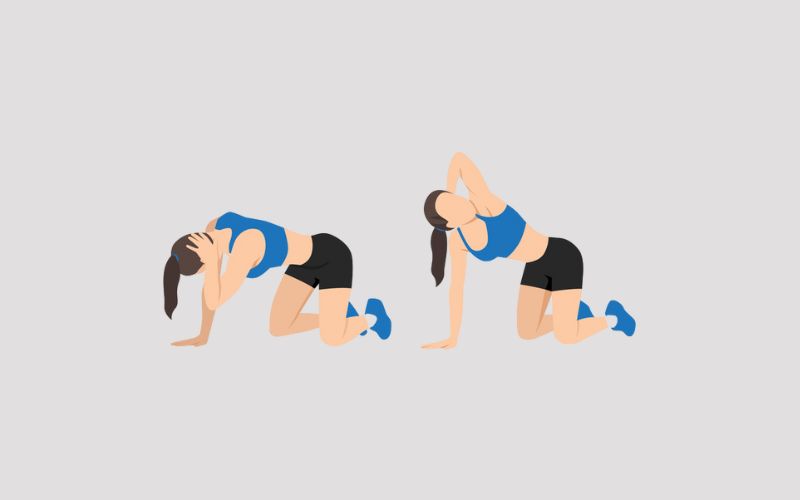
Here’s how to do this stretch:
- Slink down to the floor and get on all fours (this is what quadruped means) with your hands directly below the shoulders.
- Place your right hand on the back of your head.
- Using your elbow to guide the movement, rotate so that it (tries to) points toward the ceiling.
- Rotate back so that your elbow points at your left hand (this will give you a pleasant and gentle stretch in your scaps—relaxation 9000!).
- Repeat 5-10 and switch sides.
Trunk rotation with leg crossover
Swimmers, particularly freestylers and backstrokers, need full access to the rotational power from their core and hips.
Stiff hips and lower back reduce the ability to rotate correctly, stretch out to maximize distance per stroke, and unleash a furious underwater dolphin kick off the walls.
The trunk rotation with leg crossover checks a lot of boxes when it comes to the best stretches for swimmers.
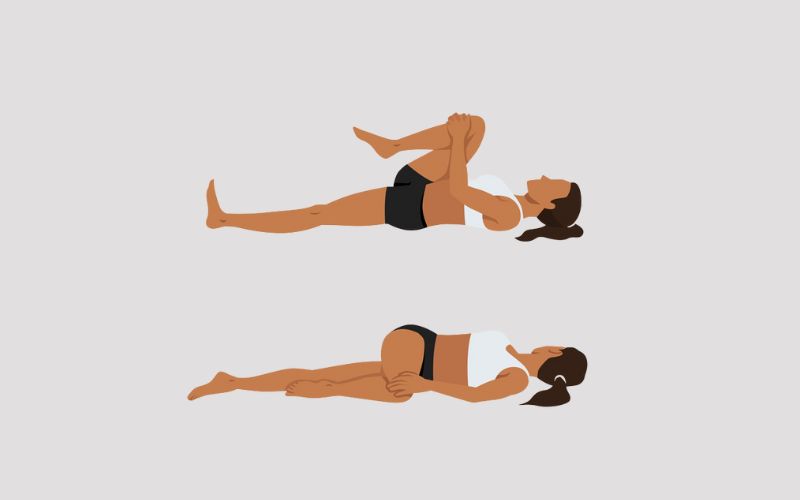
Here’s how to do it:
- Lay down on your back and bring one knee so that it’s at a 90-degree angle
- Leading with the knee and using the opposite arm to help guide, pull your leg across the body
- Keep your shoulders on the floor to maximize the stretch
- Hold for 10-20 seconds and repeat on the other side
- Core and lower back unlocked!
Note: This stretch is also highly relaxing. It is great for post-swim stretching when you need to unwind after a nasty main set.
Kneeling hip flexor stretch
The kneeling hip flexor stretch helps swimmers maintain (and improve) mobility at the front of the pelvis and hips.
For swimmers who struggle with lower back pain, stretching out the hip flexors can help alleviate the tightness (Ingber, 1989) and improve lumbar stability (Juker et al., 1998).
The kneeling hip flexor stretch is straightforward:
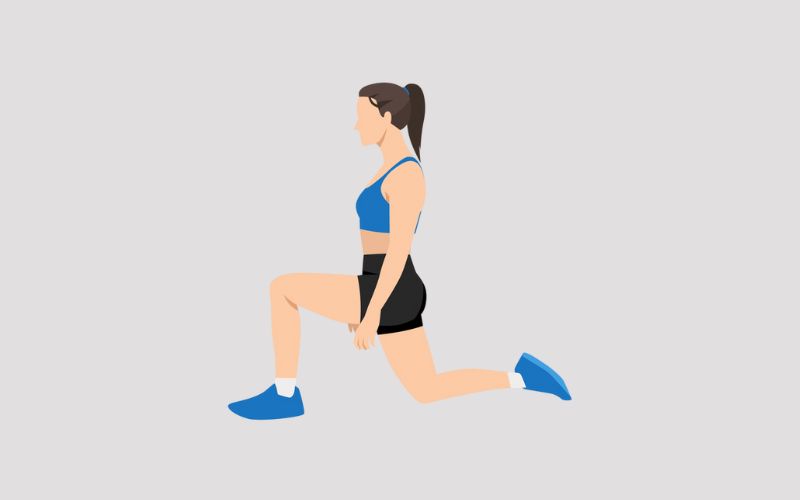
Grab a towel or stretching mat (especially if you are stretching on a tiled pool deck—protect those knees)
- Place the right knee on the mat and your left leg bent at the knee in front of you
- Lean forward with your hips until you feel a gentle tug at the top of your thighs
- Explore the end-of-range spot and hold for 20 to 30 seconds
- Switch sides and repeat several times over
Hip flexors are crucial for fast swimming as they help stabilize the core, improve balance, and even increase glute muscle activation (Marin et al., 2021).
Doorway pec stretch
One of the not-so-fun quirks of swimming is that, there is a distinct overuse injury named after our sport. Swimmer’s shoulder.
A study (McMaster and Troup, 1993) of 1,262 American club swimmers—including national team members—found that 10% of age group swimmers were experiencing shoulder pain when surveyed. This number grew to 26% when the national team members were surveyed.
While there are several causes of swimmer’s shoulder, from muscle imbalances to shoulder fatigue, one of the culprits is pectoralis minor tightness, which leads to dysfunctional movement of the shoulder blade (Ludewig & Cook, 2000).
The result?
Pain with overhead movements (ahem, swimming).
To keep the pectoral nice and supple, add the doorway pec stretch to your post-workout stretching routine (focus on the dynamic stretches—cross-body arm swings, for pre-swim range of motion).
Here’s how to do it:
TODO add image here
- Using either a doorway or a wall, raise your arm up laterally and bend at the elbow.
- Park the forearm against the door frame or apply some pressure against the wall.
- Gently step forward with your body until you feel the stretch in the pecs
- Hold for 20-30 seconds, switch sides, and repeat several times
Tip: Between static stretching sets, do 10-15 cross-body arm swings to increase blood flow to the target area. Combining dynamic and static stretching has been shown to be more effective for increasing range of motion than static stretching alone (Blackhurst et al., 2015).
Lat stretch
The latissimus dorsi, more commonly called the lats, play a huge role in swimming performance.
The big, fan-shaped muscles in the back that jut out, creating the V-shaped back swimmers are renowned for, power much of the pulling motion, creating stability in the shoulder joint, and helping lock in your streamline when blasting off the wall.
The lats do a lot of work for us in the water, meaning we should take care of those bad boys.
Excess stiffness in the lats limits scapular motion and stability and reduces the power we can exert in the pool. A decreased range of motion in the lats also increases the likelihood of injury in the water (Kibler & Sciascia, 2010).
Stretching the lats is easy and can be done in many ways.
TODO add image here
After a swim at the pool, hop out, grab the railing on the diving board, hinge at the hips, and lean the hips backward, creating a gentle and highly satisfying stretch in the lats. We will feel it down the back.
Another way to perform this stretch is when you find yourself sitting down. Place your hands and arms into a streamline above you, and simply lean a few inches laterally.
The lats are known as the “swimmer muscle” due to their huge role in the water, particularly with the overhead swim strokes (freestyle, butterfly, and backstroke).
Take care of your lats with consistent stretching, and your lats will take care of you when diving into the pool for another monster swim practice.
Elbow Pull for arm pit
In swimming, you’re constantly using the muscles that surround your arm pit. Every pull you take — for all four strokes — uses these muscles which include your triceps, lats, and various shoulder muscles. Make sure you stretch them out really well. Here’s how:
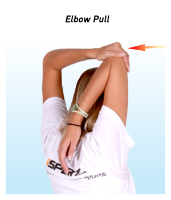
- Place your right hand behind your head, and point your elbow straight up.
- Take your left hand and place it on your right elbow.
- Pull your right elbow inward with your left hand.
- Hold this position. Then switch arms, and repeat.
Wall Lean for your calves
This stretch is great after long kicking sets. After you feel that burning sensation in your calves, wall leans are a great way to loosen them up. Here’s how to do a wall lean:
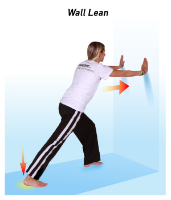
- Place your hands on a wall at about shoulder-height. Keep your hands shoulder-width apart. Lean against the wall while facing toward it.
- Scoot your right foot back as far as it can reach without straining it.
- Place your right heel on the ground.
- Keep your right leg straight.
- Hold this position. Then switch legs and repeat.
Pretzel Stretch for your buttocks
Believe it or not, you use your buttocks a lot in swimming. You use it while you kick. You also use it every single time you push off the wall. Think about how many turns you do in every practice! You’ll soon realize how much these muscles are utilized when you begin this pretzel stretch. Follow these steps for a good pretzel stretch:
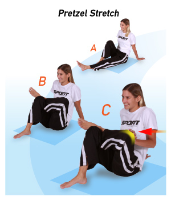
- Sit down on the ground.
- Bend your right leg, and place the sole of your foot flat on the ground.
- Lift your left leg up, and place your left ankle on your right thigh.
- Push your left knee away from you. If you’re not feeling the stretch, scoot your right foot in closer to your buttocks.
- Hold this position. Then switch legs, and repeat.
Butterfly Stretch for Your Inner Thighs & Groin
There are a fair amount of groin injuries that occur in swimming: Especially in breaststroke. To help prevent inner thigh and groin injuries, make sure you stretch them out really well.
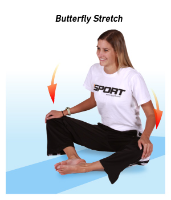
- Sit up tall on the floor.
- Bend your knees and relax your calves against the floor.
- Press the soles of your feet together.
- Hold your feet so that they remain touching. For a deeper stretch, press down on your knees.
Model Pose for Your Laterals
Swimmers tend to have very defined laterals for a reason. You are constantly overworking these muscles in practice. The model pose is a fantastic stretch to loosen up your overused laterals.
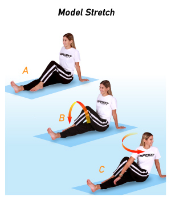
- Sit on the floor.
- Bend your left leg, and place your left foot flat on the ground.
- Straighten your right leg.
- Cross your left foot over your right leg.
- Take your right elbow and press it diagonally against the outside of your left leg.
- Push against your leg, and twist your torso.
- Hold this position. Then switch sides and repeat.
TODO
- https://www.usms.org/fitness-and-training/articles-and-videos/articles/three-yoga-poses-to-do-before-a-masters-swimming-workout
- https://www.mitrecsports.com/aquatics/8-important-warm-up-stretches-for-swimmers/
- https://swimswam.com/stretches-for-swimmers/
- https://www.swimoutlet.com/blogs/guides/stretches-for-swimming
- https://www.stretching-exercises-guide.com/exercises-for-swimmers.html
- https://swimswam.com/how-to-end-shoulder-pain-and-swim-faster/
- https://www.usms.org/fitness-and-training/articles-and-videos/articles/shoulder-exercises-for-swimmers?Oldid=3186
- https://getpocket.com/explore/item/five-stretches-you-should-do-every-day?utm_source=pocket-newtab-en-us