Exercise - Pull ups and Chin ups
Chin-up vs Pull-up
The grip position differentiates a pull-up from a chin-up.
In a chin-up, you grip the bar with your palms facing towards you. This is slightly easier than a pull-up position because your biceps help much more in this position.
For a pull-up, grip the bar with your palms facing away from you.
Generally, chinups are a little bit easier than pullups, meaning that you can probably do more repetitions using a chinup grip than a pullup grip.
This is likely due to increased activation of the biceps during chinups, whereas pullups rely more heavily on the latissimus dorsi and do not allow as much bicep involvement.
Additionally, pullups offer less mechanical advantage than chinups due to the wider grip. This results in more muscle contraction required for a given range of motion.
If your goal is specifically to target the latissimus dorsi to build a wider back, then pullups may be the better variation for you due to the emphasis on this muscle.
If your focus is more on biceps, consider doing chinups instead of pullups.
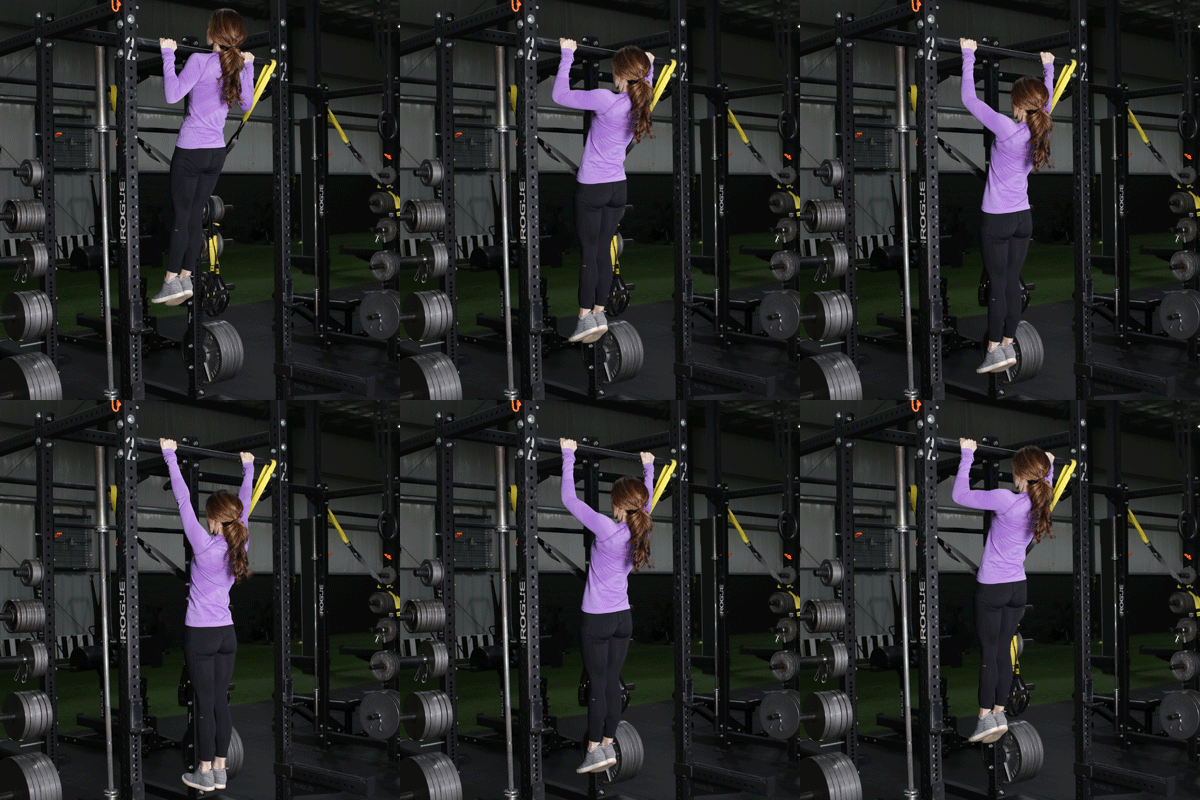
Pullup:
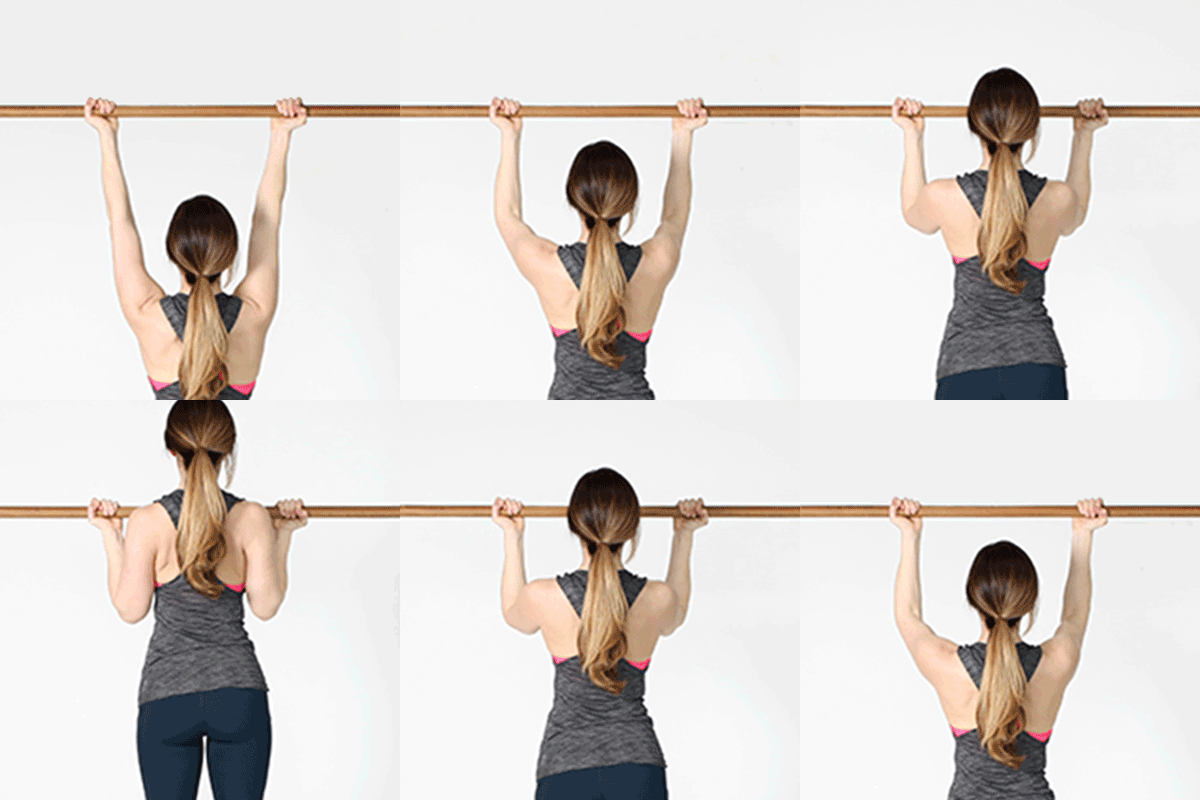
Chinup:
How to perform chinups
Grip the bar slightly narrower than shoulder-width apart.
To perform the chinup:
- Hang from the bar using a supinated grip.
- Engage your core and legs to prevent swinging. You can cross your feet behind you or keep them in front of you if you can adequately control the swing.
- Pull your shoulders into place by squeezing your shoulder blades together and downward in an opposite motion as a shrug.
- Lift your chest to the bar by pulling your elbows downward, bending at the elbows, and actively contracting your lats by emphasizing a downward motion with your shoulder blades.
- Rise as high as possible without shrugging your shoulders or lifting your chin toward the bar.
- Slowly return to the starting position.
- Repeat for the desired number of repetitions.
How to perform pullups
- Grip the bar with your hands wider than shoulder-width apart and your palms facing away from you in a pronated grip.
- Roll your shoulders back and down by bringing your shoulder blades together and drawing them down toward your tailbone.
- Step off of the box or platform you’ve used to reach the bar, or lift your feet off of the ground to hang from the bar.
- You can cross your feet behind you or keep them directly under you by engaging your core.
- Raise your chest toward the bar by engaging your lats. Visualize bringing your elbows downward and inward toward the sides of your torso. Work to keep your elbows and shoulders in line with the bar.
- Raise yourself as high as possible. As your head approaches the bar, lean back slightly so your face clears the bar, and work to bring your upper chest to the bottom of the bar.
- Throughout the range of motion, maintain a neutral spine and avoid swinging your legs for momentum or rounding your upper back and shoulders.
- Lower yourself down in a controlled manner to return to the starting position.
- Repeat for the desired number of reps.
Muscles worked during the chinup
In general, the chinup will build muscle and strength in the upper back and biceps, as well as stabilizing strength in the core and shoulders.
Muscles worked during the pullup
The pullup works most of the major muscles in the back and upper body.
The primary muscles worked in a pullup include:
- latissimus dorsi
- middle trapezius
- lower trapezius
- rhomboids
Additional secondary muscles worked include:
- biceps brachii
- infraspinatus
- pectoralis major
- erector spinae
- external oblique
The grip
- Pronated grip
- Palm facing outwards (away from you)
- Uses weaker muscles in the arm
- This grip heavily uses the brachioradialis, a muscle in the forearm. That is why the pronated grip is much harder for some people than neutral or supinated, because those positions take out the brachioradialis or add a another much stronger muscle, like the bicep.
- This grip put more emphasis on the back.
- If you want freaky forearm gains, slap a fatgrip handle over your pullup bar.
- Supinated grip
- The easiest grip as it uses strong muscles like biceps.
- Good for beginners.
- Palm facing inwards.
- This is easier as it reduces the stress on your lats.
- Neutral grip
- Palms facing each other.
- Good for all levels.
- Comfortable grips - friendly to wrists. It put our wrist at the most natural position without twisting it like overhand grip does.
Common mistakes
- Not achieving full extension at the bottom or beginning part of the exercise is the most common mistake people make when performing pull-ups.
- Just going down halfway and back up is missing the most important part of the exercise.
Reading material
- http://www.50pullups.com/
- https://thegravgear.com/blogs/calisthenics/perfect-pull-up
- https://www.usms.org/fitness-and-training/articles-and-videos/articles/pullups-are-possible?Oldid=3107
- https://www.healthline.com/health/fitness/pull-up-vs-chin-up
- https://www.opexfit.com/blog/seven-different-pull-up-grips-and-their-benefits