Tennis - The serve
The goal
Power, spin, control and consistency
Fundamentals
Learn these fundamentals before adding advanced stuff like really coiling the body, doing kick serve, jumping into the court while serving, etc.
1. The stance
- Stand so that your left foot is pointing to the right netpost and the right foot is parallel to the baseline.
- The heel of the first foot is aligned with the toe of the back foot.
- We can adjust this based on which direction we are serving.
- In the beginning, practice serves from the left side of your court (as opposed to doing it from the right side of your court).
1. The grip
- Continental grip
- It will give us flat with topspin.
- How to find the continental grip? When you hold the racket with your right hand, and use your left index finger to point to the valley between the right hand’s index finger and the thumb, the left index finger should be pointing to the top left edge of the racket.
1. The hitting part (Swing up and Pronation)
- If we learn this correctly, the back-swing will naturally align with this. That is why, this comes before the back-swing part.
- Common mistake is to turn the body orientation towards the opponent and use the whole arm, with a lot of strength from the shoulder, and try to hit the ball to them. It may feel natural but it will not help with an advanced serve.
- Two fix this mistake, practice the two swing paths towards the target (instead of one swing path).
- The first swing path is roughly at the 45 degree angle to our court.
- The second swing path is perpendicular to the net.
- With practice, the two swing paths will merge together. But remembering the distinction is important.
- Make sure that the hand is not rigid. The arm should be loose. No tension or stiffness in the arm. The swing should not be mechanical. It should be fluid.
- Notice how you are dropping of the arm towards the back before the serve.
- After the toss, drop the serving arm towards the back.
1. Backswing and toss
- Toss with a straight arm
- Hold the ball in the middle of the hand
- Leave some space towards the tips of the fingers. With this space, you can hold the racket before the toss.
- Before the toss, practice swinging both arms simultaneously - like a pendulum.
- Eventually, we end up in the trophy position.
- Don’t worry too much about holding the racket vertically in the trophy position. The first problem with it is, from the vertical position, the racket likes to fall backwards. That is called waiter’s tray position. From there, the racket head needs to travel a long distance before we hit the ball for the serve. It is bad for acceleration. The second problem with it is, the players will feel like the racket head has a long way to travel before the serve. For this reason, players try to make it shallow and hit the serve without following through with the swing.
- So, instead of trying to hold the racket vertically in trophy position, hold it so that the racket head is towards your head. The bottom edge of the racket should almost touch the back of our head.
- Practicing reaching this position from the initial pendulum position is also good exercise for the toss.
- With the toss, if we don’t hit the ball with the racket, it must fall right back into the hand with which we are tossing it.
1. Putting everything we learned so far into one movement
- Bring the backswing and the hitting part into one motion.
- Break this down into two parts.
- For part one, find your trophy position but don’t hit the ball. Instead, catch the ball with the toss arm.
- For part two, hold your trophy position, toss the ball again and then, hit the serve.
1. The power move
-
This is to put more power into the serve
-
When the racket is starting to drop from the trophy position, the body must start to turn. In other words, initiate the turn with our hip and continue the turn with our shoulders. This is also called, driving with your hip.
-
The racket drop and the body rotation must happen at the same time.
-
Think of it like throwing a ball with your serving hand.
-
In a good serve, we don’t face the court until after we finish hitting the ball.
-
When hitting the ball, our body should still be at roughly 45 degree angle to the baseline.
-
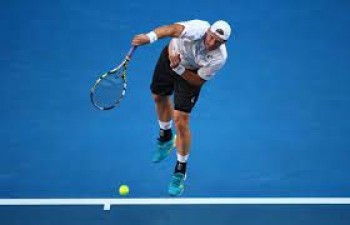
Another thing to remember is, power doesn’t come from throwing the arm from the shoulder. Power comes from driving the body from the hip and the pronation. Think of it like you are throwing the racket towards the right side and then do the pronation.
-
After the hit, if we gently allow the body to uncoil, the racket will end up on the left side of our body. This is a natural progression.
-
But don’t throw your arm from the shoulder to make the racket head end up on the left side of the body.
1. Finding flow. Make it fluid. Putting everything together.
- Take a leap of faith and do the whole serve together.
- Repition and practice helps.
- Recording yourself also helps.
- Just swing your racket from the start to the beginning to imprint the motion in your mind.
- Practice swinging the racket on it’s edges. When starting the swing, lead it with an edge. When reaching the trophy position, lead it with an edge. When rotating the shoulders from the trophy position, lead it with an edge. With the pronation, make the transition from one edge to the opposite edge. When we go into the follow through position, lead it with an edge.
- The only time the racket-head is not leading with an edge is when the ball makes contact with the racket-head.
The move/position to aim for
At the point of contact, we should have our shoulder in this position.
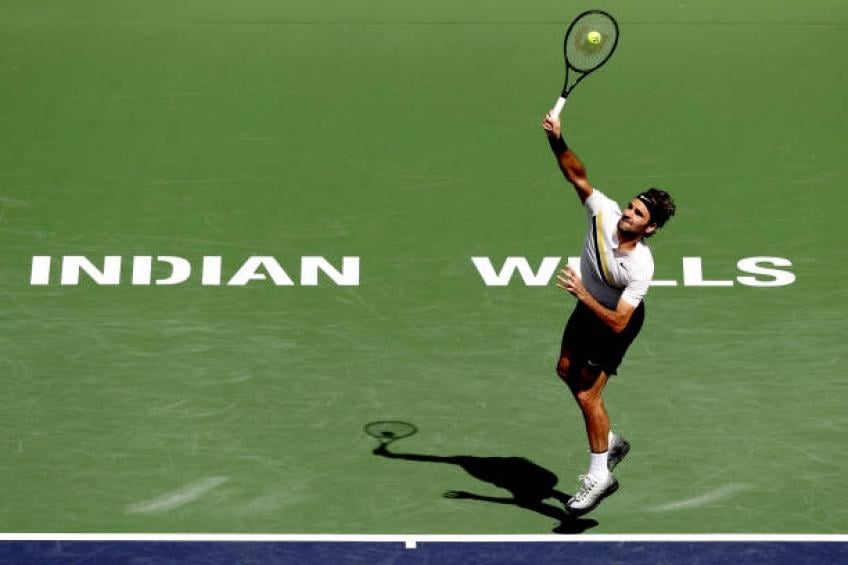
In general, for beginners, when we serve, we think about the strings and making sure that the strings can look at our target. With the beginner grip, you only have one option. The strings can only go through the court. They can’t go through and brush.
When you want to start serving bigger and more consistent, you need spin. You need spin to create margin of safety and actually bring the ball down to the court.
That is why we switch to the continental grip (or something very close to it) for serves. The Continental grip allows you to create spin and penetration at the same time.
But the problem is, we flip the grip (to make the racket face the opponent) halfway through the serve and do not execute it properly.
Drill: Hold your arm with the racket all the way out to the side. Now the racket can go through the ball and it can brush the ball. The racket can do both at the same time. The racket can go through the ball as much as we want by just having the the arm pronate forward or we can brush the ball. But we are not going to hit the serve with the racket to the side of the body. So, the adjustment we need to make is this.
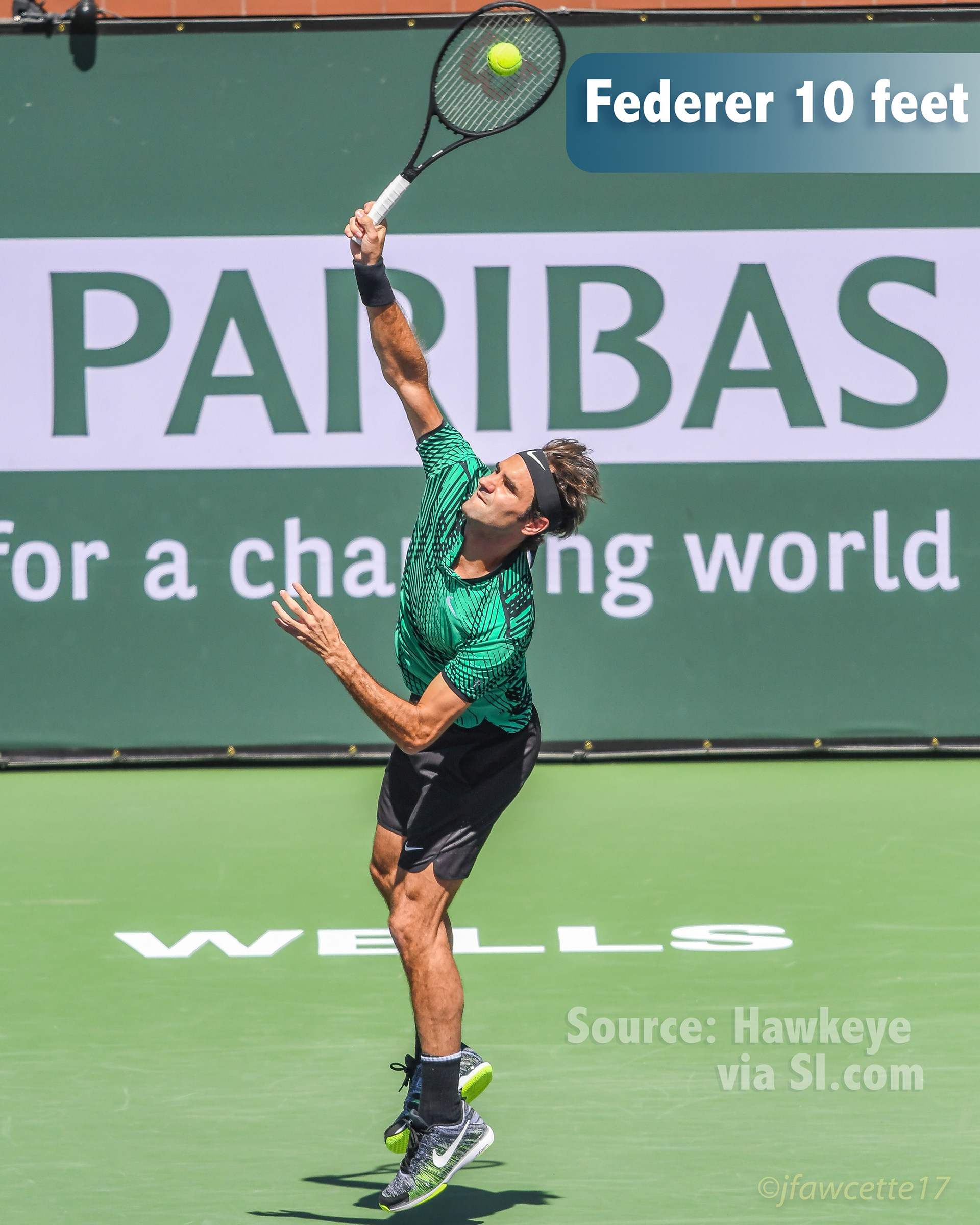
All the best pros do this. When you watch them go through their serve, they’re in this position. This pattern is key to having a great serve.
The shoulders need to be in a tilted angle. It gets you in this idea of looking up with your racket from the side instead of looking straight up. Start with the shoulder angle with the head on the side and we need to be looking up at contact.
What does it do?
At this angle, we can get the racket face looking at the opponent, we can drive through the ball and create spin.
Some drills to start using this new shoulder position
First drill:
Simply do some side to side bends. Put your hands on top of your head. You don’t need your racket. And bend having your dominant side going towards the sky. And while you’re bending, just look up. Just bend where your head is slightly on the side. It’s not going to be completely on the side.
Next drill:
Do a double-sided bend. This will make sense once we go through our whole serve motion. From step 1, go to your non-dominant side, then the dominant side. Practice this bend.
Next drill:
Grab your racket. Simply have the arm completely straight out. Bend the elbow. From here, just turn like you are serving. Do that first side bend. This position helps you do your racket drop towards the back - to the trophy position.
From here, the next part is, extend the arm towards contact. The contact is going to be over your hitting arm shoulder.
We are getting ready for the full motion.
First bend to the non-dominant side. The second bend to the dominant side. This is where we bring the arm up and then extend it.
Practice this action of going bend and bend. So it starts to smooth itself out.
Then we start pulling the shoulder by rotating to the dominant way. That is what we are training the shoulder to do.
Second serve mindset
How to serve reliably under pressure? What should be our mindset and thought process when we are faced with the second serve on a big point?
You know the difference between practicing the serve on your own and playing points against an opponent and realizing that your serve is not going as well as it did in practice. Nothing has changed in the court. It has exactly the same measurements. Your technique has not changed suddenly. Everything is the same except your mindset.
Accept missing the first serve
- Assume that I have just missed my first serve and I am about to serve my second serve.
- First, I have no thoughts about that missed first serve. I don’t regret missing it or wishing how great it would have been if I hit it. I don’t dwell on the past. I immediately accept that I missed the first serve. Knowing that the probability of hitting a first serve is somewhere around 50% - perhaps a little bit higher on good days and possibly quite lower on bad days.
Take enough time to perform your ritual.
- Secondly I make sure I take enough time for my second serve. Many players rush into their second serve because of the anxiety they feel when it comes to competition. You’re just about to start another little battle with your opponent and that can make you anxious. And being anxious makes you rush things. You must learn to discipline yourself and always follow the same ritual. A ritual is a series of actions that you always perform and by following them exactly in the same way every time, you train yourself to use exactly the same amount of time for preparation of your second serve. And by doing that you’re training yourself to focus on the task at hand in exactly the same manner which helps you recreate your second serves in the same manner. And therefore hit them with very high consistency. My ritual consists of one deep breath and an exhale which in a way helps me clear my mind. I also like to loosen up my arm a little bit before the serve. And I usually tap the ball three times in the ground.
Make a decision on how you will serve
While I’m doing that I’m visualizing the trajectory of my second serve. Depending on the score, my opponent’s strengths and weaknesses, how well I’m serving today, the wind, the sun and other factors, I will choose a certain type of second serve. I may go for a safer one, more in the center of the service box or I might go for a more accurate one, closer to the edges of the service box. I make that decision very quickly - probably in two seconds. I also never doubt my decision nor do I change my mind. Why? Because I’ve done that in the past and it usually resulted in a poor serve or a double fault. You must stick to your initial decision and you must hit your second serve decisively. Once I finish my third tap, I take one more look at the target area, which helps me orient myself and have a clear direction of the serve in my mind. That’s because once I toss the ball up and I execute the serve I won’t see the court. So I need to have a good orientation of where I am in relation to the target area.
See in your mind’s eye the flight of the ball
Once the ball is up in the air, I imagine imparting a lot of spin on it with strings of my racket. And I imagine sending the ball into a trajectory that will eventually end up in the target area. It takes time for you to start trusting the idea that hitting up on the ball will eventually bring the ball down in the court. And you’ll hear me explaining this later in this clip when I talk with a player about my mindset when serving.
Focus just on the execution of the serve
Now we’re coming to the most important part of the second serve which is the mindset. Maybe most of you are trying to achieve a certain outcome with your serve. You may try not to miss. You may try to hit to the backhand of your opponent. You may want to pull your opponent out of the court. And so on. You may also feel some anxiety when you’re executing your second serve. But that’s because you’re focusing on the outcome and that’s not the right mindset. You need to focus on the process of executing your second serve. I focus on the execution which I already mentioned before. Namely, I want to impart lots of spin on the ball and send it in a certain trajectory towards a certain target. I can only control the outgoing angle from my racquet, the direction and the amount of spin I impart. I know that if I execute the serve well, it will result in a good serve. I know that the outcome I’m looking for will happen if I devote all my attention to the execution of the second serve. Another way of putting it is this. When I’m serving a second serve, I am not yet playing my opponent. I’m only executing the server exactly the same way as I do in practice. I have no thoughts about my opponent and what he might do. Why? Because I can’t control that. What he does is his decision. He may take risks and attack my second serve. But is is his call, not mine. I need to ensure that I hit a good second serve and that will make his task more difficult. So I only focus on my part when I’m serving, since my opponent has no influence on the serve. When for example we rally later, my opponent will totally determine my next situation because he creates it. If he hits to my backhand side, I need to play from that side. I might choose to run around and hit a forehand but I still need to hit a certain ball from a certain position that was determined by my opponent. But not so on my serve. My opponent has no influence on the serve - unless I allow that with my mindset. So make sure you don’t do that.
Always serve decisively
While you should have a target in your mind that typically makes your serve go to the weaker side of your opponent, you should put the actual outcome in the back of your mind, and completely focus on the execution of your serve. So as I said before, when I serve I don’t yet play my opponent, because he has no influence on my serve. It’s only me, the ball and the target area. I focus completely on sending the ball in my imagined trajectory, which has a certain height above the net and that goes towards a certain target zone. Only when I complete my serve, I actually start playing my opponent. From then on, he will make me move around the court and force me to make very quick decisions on what to do with each shot.
Summary
So let’s summarize all this in a few key points.
- Accept missing your first serve if it happens and immediately put it behind you. You can’t change the past.
- Always perform your ritual before the second serve making sure that you’re not rushing.
- While performing the ritual, decide on the type of the second serve and stick to that decision.
- Visualize the trajectory of your serve making sure that you’re aware of the height above the net.
- Do not play against your opponent by thinking what outcome you want to achieve with your serve. But focus only on the proper execution of your second serve. Your attention should be only on hitting the ball with topspin and sending it into a trajectory that you imagined.
- Always hit second serve decisively. The usual mindset of players is to be cautious. And that will never make you a good server. Never think what you don’t want - meaning making a double fault. And always think what you do want - meaning hitting a good second serve.
- If your second serve is not reliable yet, and you always doubt if you’re going to make it, I recommend serving a second serve for a couple of months continuously. If you play matches, don’t serve any flat first serves. But just keep hitting topspin serves. In time, you will stabilize it to a point where it’s going to be very reliable. Then you can come back to hitting your flat first serves again. Trust me you won’t forget how to hit them.
From The Inner Game of Tennis
Compared with the other strokes of tennis, the serve is the most complicated. Both arms are involved in the stroke, and your hitting arm is making simultaneous movements of shoulder, elbow and wrist. The movements of the serve are much too complicated for Self 1 to master by memorizing instructions for each element of the stroke. But it is not so difficult if you let Self 2 do the learning by focusing attention on the different elements of the stroke as well as the stroke as a whole.
Some Places to Focus Attention on the Serve
In general, there are some specific places where it can help to focus your attention for practicing your serve. Remember the fundamental goal is still the same, over the net and into the court with power, accuracy and consistency. Here are just a few variables to consider.
THE TOSS • How high is it? • How far does it drop, if at all, before contact with your racket? • How much forward or behind, right or left of the toe of your front foot?
BALANCE • Is there any time during the serve when you feel off balance? • What is the direction of your momentum at follow-through? • How is your weight distributed during the serve?
RHYTHM • Observe the rhythm of your serve. Count the cadence of the rhythm you feel by saying, “da … da … da,” one “da” at the moment you start the serve, one at hit, as you bring the racket up, and one at contact. Feel and listen to the rhythm until you find what feels best and works best for you.
RACKET POSITION AND WRIST SNAP • Where is your racket at the moment before moving forward toward the ball? • Is your racket coming around the right side of the ball or the left? Hitting it flat, or coming from left to right? To what extent? • To what extent is your wrist snapping at impact? • At what point in the swing does it begin to release?
Power
Because power is so sought after on the serve, it is not unusual for players to “try too hard” to produce it, and in the process to overtighten the muscles of wrist and arm. Ironically, the overtightening of these muscles has the opposite effect on power. It reduces power, by making it more difficult for the wrist and elbow to release freely. So again, the important point is to observe the tightness of your muscles so that you can experientially find the degree of tension that provides the best results.
Your teaching pro can be helpful in pointing out the best focus of attention for your particular serve at its current state of development. As long as you take his guidance as an opportunity to explore your own experience, you really cannot help but learn in a natural and effective manner.
Besides the fact that we all have to learn as individuals, it is also obvious that there is no one best way to serve for everyone. If there were, why do so many of the best servers in tennis today serve so differently? Each may have learned things from others, but each of them evolved over time a way of serving that suited his own body, skill level, personality traits—in short, himself. And their process is still evolving. And in spite of all the credit they might give to different players or coaches for helping them find their serves, their primary development was directed from within themselves by that simple process of what feels good and what works for each individual.
As with many of the other strokes in tennis, the orthodox approach to the serve is under challenge by pros who seem to be breaking out of its mold. When I learned to serve some fifty years ago, my coach, John Gardiner, one of the best in the field, taught the approved method of the time. To get the arms moving in the correct direction and rhythm, we chanted the mantra, “down together, up together, hit.” What this meant was that both the tossing and the hitting arm were brought down at the same time. Then as the tossing arm was raised to toss the ball, the hitting arm was also raised and dropped down the back, poised for the moment of hit—much like a football quarterback cocks his arm in preparation to throw a forward pass. Then depending on how high the ball was tossed, the hitting arm would surge forward to strike the ball so that it would be fully extended at impact, and then follow through past the feet. Basic tennis gospel for fifty years.
Then just today, in the midst of writing this section on serving, I read an article in this month’s Tennis magazine that pointed out that the best servers in the game today, including Steffi Graf, Todd Martin, Pete Sampras, Mark Philippoussis and Goran Ivanisevic, do not in fact follow this down-together-up-together motion. So from the point of view of the “right way” to serve, all these great players are doing it “wrong.”
The article was entitled “Stagger Your Arms for Serving” and the author recommended that when the tossing arm is fully extended for the toss, the hitting arm should still be pointing down toward the court. To learn to serve like these pros, the player is instructed thusly: “As the tossing arm rises, drop the hitting arm back and down,” followed by this explanation:
The old “up together” technique, which may seem more rhythmic, actually works against creating power for some players, because it forces the hitting arm to pause at the top of the backswing, destroying the build-up of momentum to that point.
The pictures of these pros serving makes it obvious that they are doing something very differently. The instruction continues:
Most important of all, note how each of these players has his or her hitting arm in the “palm-down” position: i.e., the hitting-hand palm is facing the ground at the moment the ball is released. … This is necessary to achieve the “lasso effect” of a good serve, in which the racquet is then quickly raised above the head and circled down around the back before snapping up to strike the ball.
I cite this instruction for two reasons: first, to show that gospels change and they are changed by people who had the courage to experiment outside the boundaries of the existing doctrine and trust in their own learning process. The second reason is to suggest that the prescribed way of making a change itself needs to change. When I read the above instruction for the so-called staggered arm timing, my mind is beset with several doubts. Do I even understand what is meant by such terms as “lasso effect” or “hitting-hand palm is facing the ground”? The next doubt that knocks at my door is, even if I did understand the instructions, could I follow them? Then, I wonder if I am going to be able to get rid of my “old way” of serving that I’ve practiced diligently for years. And finally, just because this way of serving works for professionals at their level, does that mean it is best for me?
So how can you benefit from such an article that may in fact be pointing out a valid new discovery about the serve? First you might want to get clear on why you might want to experiment with making a change in the first place. It may not be sufficient reason that some top pros serve differently now or that this way of serving is coming into fashion. On the other hand, you may feel that if there is a way for you to increase power on your serve it would be worth the effort of experimentation for you. This first step of knowing what results you want is critical to maintaining control of the learning process where it belongs—with you.
After reading an article or watching some people serve with the new method, don’t jump to the conclusion that this new way is necessarily “right” for you. Just let yourself (Self 2) observe whatever it finds interesting, and ignore comments from Self 1, which will want to be making up little formulas for you to follow. As you observe, certain things will “stand out” or come to the foreground of your attention spontaneously. Allow Self 2 to focus on elements that in its intelligence it might be ready to experiment with.