Tennis - footwork practice
Transform Your Tennis Footwork
TODO: https://skydmagazine.com/2018/06/breaking-down-defensive-footwork/
Transform Your Tennis Footwork In 10 Minutes - Instant Tennis Improvements.
Footwork and movement in tennis is the glue that binds our entire tennis games together. You could have great strokes, the biggest forehand in the world, but if you’re not in the right position to hit that forehand, your shot will suffer greatly. If you look at most professional tennis players, they all have excellent tennis footwork and movement. The big three - Roger Federer, Rafael Nadal, and Novak Djokovic have even better footwork and movement than everyone else.
There are many different footwork patterns that tennis players should learn, we’ll focus on five of the main ones.
This includes the split-step, the side shuffle step, the crossover step, the cross-behind step, and the first step to the ball.
If you focus on and improve these five tennis footwork patterns, you’ll become a faster, more energy-efficient tennis player.
Split-Step
- The first step that you must master in tennis is the split-step. The most important footwork step we use in tennis. Whenever your opponent hits their shot, you should try to be balanced and ready to move off in any direction. Using a split-step will help you to do that.
- Have your feet around one and a half to two shoulder widths apart and jump off the tennis court a few centimeters. Make sure you have the weight of your body on the balls of your feet, not on the heels.
- It will help you push off in any direction.
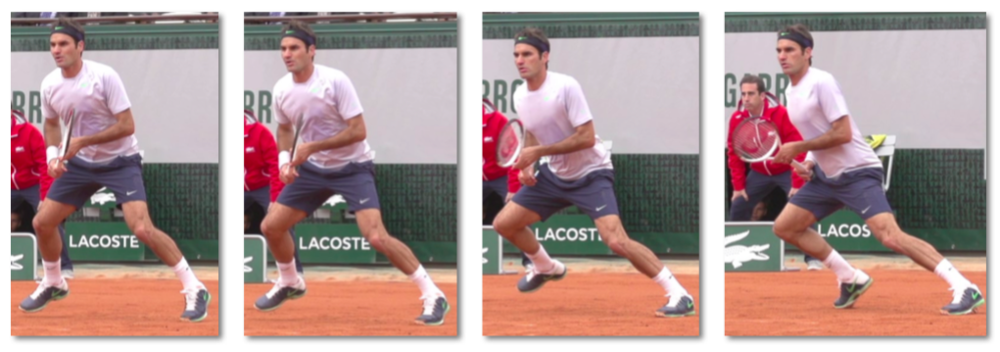
Drill
- Always be on the balls of the feet and not on the heels.
- Stand with one and a half to two times the shoulder width between your feet and jump forwards and backwards. After that, go five steps forward and five steps backward. And increase the steps depending upon your fitness level.
Side Shuffle Step
https://urec.wsu.edu/Exercise2/Search/DisplayExercise?ActivityID=516
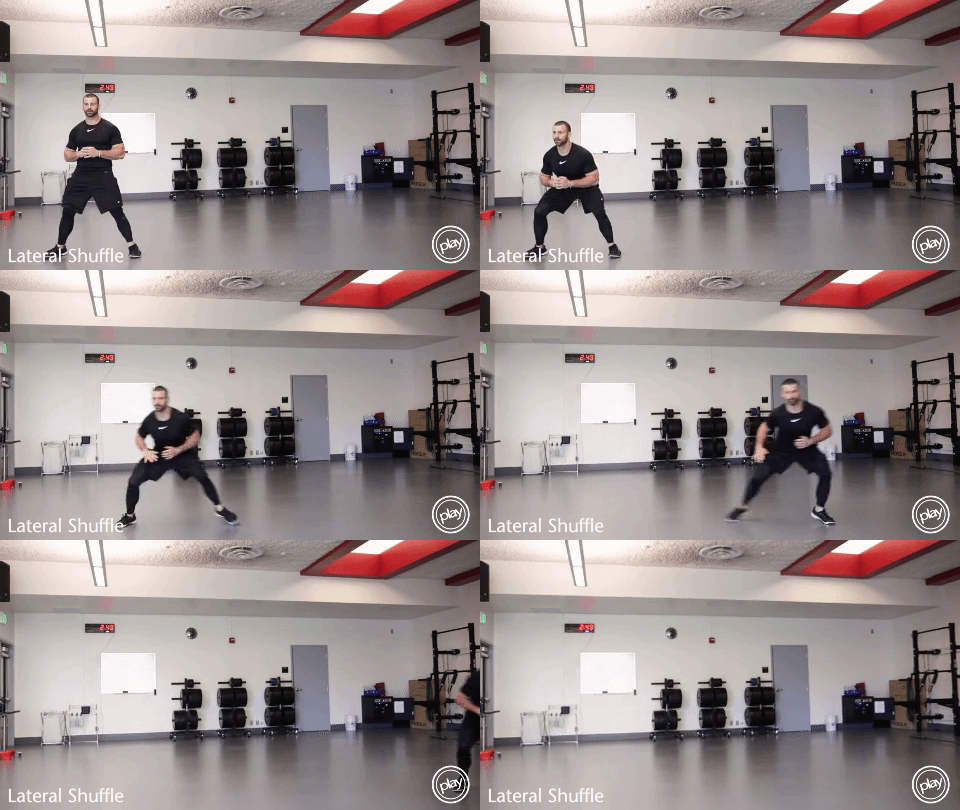
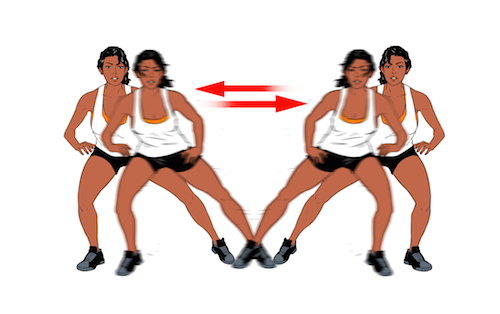
- The second step you must master is the side shuffle. This is perfect for adjusting to balls that are quite close to you, where you only need to move a few feet in any direction. You can also use this footwork pattern when recovering if you only need to cover a few feet.
- When you don’t have a lot of distance to cover, this is the best.
Drill
- Start at the middle of the court, go towards the right edge of the court and then go back to the middle of the court. Later, do this from one end of the court to the other end. Keep increasing the speed. Start with small steps and focus on speed. You can move to big steps later.
Crossover Step
https://urec.wsu.edu/Exercise2/Search/DisplayExercise?ActivityID=517
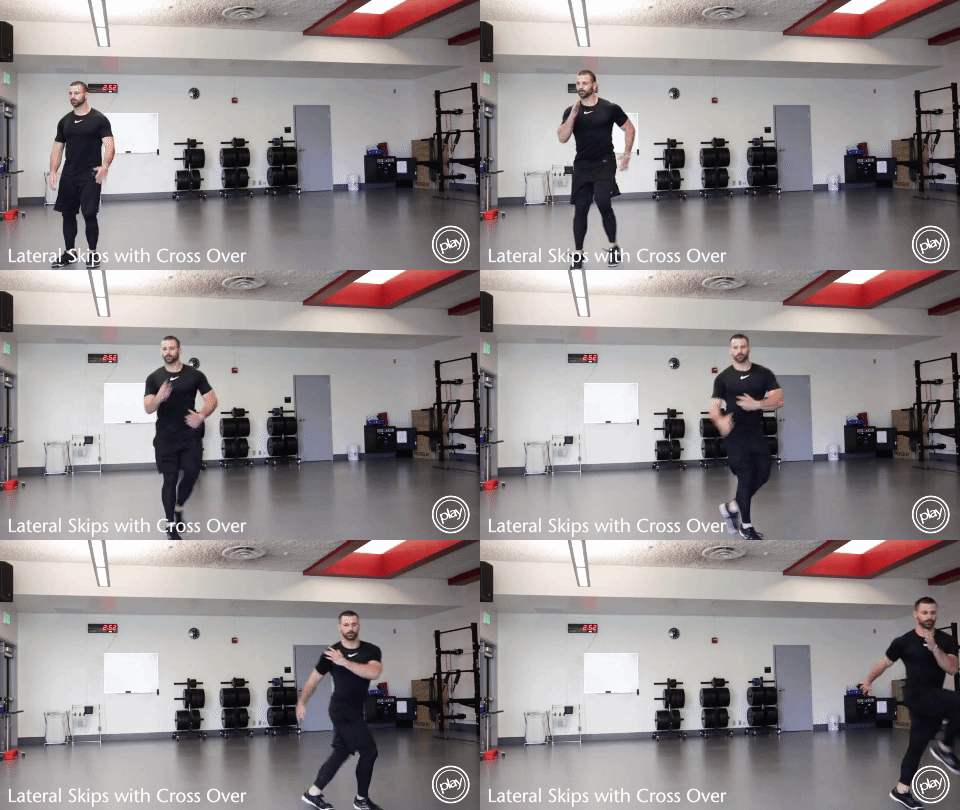
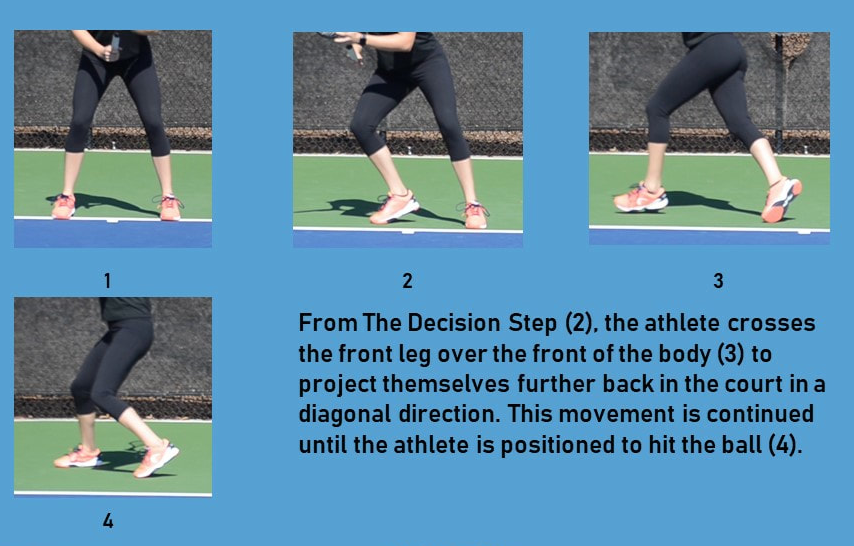
- This step is the most important step to master for recovery off a wider ball. The crossover step will allow you to cover much greater distances in fewer steps than the side shuffle and will save you energy as you are using the momentum that the body creates to move.
- This has many benefits over the side shuffle. It takes less steps than side shuffle steps. It also uses less energy.
- When you have more distance to cover, this is the best.
Drill
- Same as the drill for side shuffle with some cross over steps in the drill
Cross-Behind Step (or reverse crossover step)
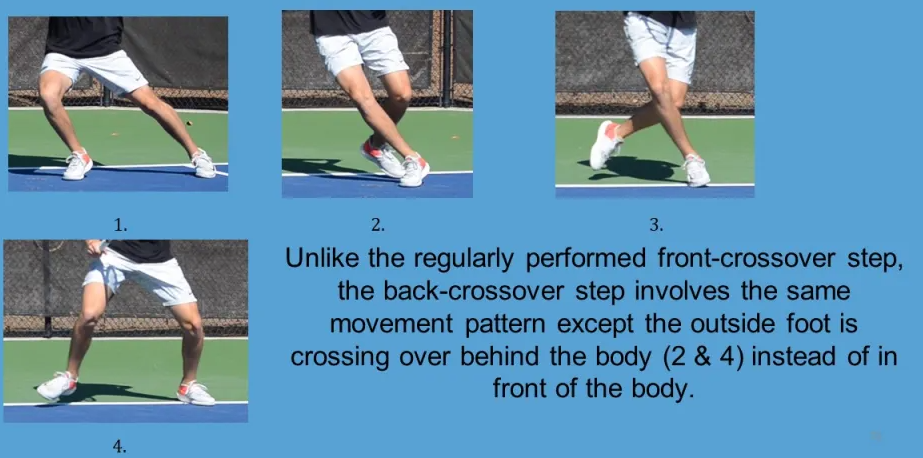
- Often when we are pushed out wide, off the tennis court, our feet end up being out of alignment. This sometimes blocks us from using the crossover step to recover with. In these situations, you can also use a cross-behind step. This will help you to cover a good amount of distance in just a few steps. Roger Federer and Grigor Dimitrov are two top players who use this footwork pattern a lot.
- Very useful with one-handed backhand techniques
Drill
- Same as the drill for side shuffle with some cross behind steps in the drill
First Step
- Getting to the ball as early as possible should always be your goal. Too often tennis players will use side steps or move to the ball facing the court, and this costs them time and energy. Sometimes, this may take too long and you may be wasting time and energy. It is not going to work in the long run.
- The first step you take to the oncoming ball should be explosive and help you create momentum.
Drill
- Start with one leg - the right one. The left leg will automatically follow.