Exercise - Jump Rope
- Advantages
- Posture
- Literature
- Drills, Benefits and Workouts
- Workout plans
- Specific tricks and General tutorials
- Progressions
- Practice by holding the rope
- Basic Jump - Single Unders - Easy jump
- One leg hops - Double Single Foot Jumps
- Kick Out Jumps
- Half and Full Twist - Twist Jumps
- Side swing
- Jump Rope Figure 8
- Alternate foot steps - Speed Step
- The Half-Jacks
- Scissors - Shuffle - Strides
- The Skier Step - Skiers
- Backward Jump
- Squat Jumps
- Squat Jacks
- Criss Cross Jacks
- Crossover Single Unders - Criss-cross - Crossover - Cross arms - Cross
- The Penguin Drill
- Double Under
- Triple Unders
- Double Under Cross
- EB (front-back cross or sailor)
- Boxer jump
- Triple Under
- Toad
- Leg over / Crougar
- Awesome Annie
- Inverse toad
- Elephant
- Frog or Donkey kick
- T
- Different Rope Types
- Shopping list
Advantages
- To some people, it is more intense and less time consuming than running, as well as being a good exercise for footwork in sports.
Posture
Get into a good jump rope posture: soft ankles, knees, and hips.
Literature
Drills, Benefits and Workouts
TODO
- How To Use Jump Rope to Improve Foot Speed: Drills, Tips & Training Plan https://elitejumps.co/blogs/guides/jump-rope-for-foot-speed
- How Jump Rope Compares to Common Cardio Machines https://elitejumps.co/blogs/guides/jump-rope-vs-cardio-machines
- Does Jumping Rope Build Your Calves? https://elitejumps.co/blogs/guides/does-jumping-rope-build-your-calves
- How 5 Minutes of Jump Rope Can Fix Your Posture and Save Your Back https://elitejumps.co/blogs/guides/how-5-minutes-of-jump-rope-can-fix-your-posture-and-save-your-back
- Is Jump Rope Bad for Your Knees? https://elitejumps.co/blogs/guides/is-jump-rope-bad-for-knees
- Boost Your Cardiovascular Health with Rope Exercises https://elitejumps.co/blogs/guides/boost-your-cardiovascular-health-with-rope-exercises
- Should I Jump Rope Before or After Weightlifting? https://elitejumps.co/blogs/guides/jump-rope-before-or-after-weightlifting
- How Long Should I Jump Rope For? https://elitejumps.co/blogs/guides/how-long-should-i-jump-rope-for
- Why Do You Need To Have More Than One Jump Rope? https://elitejumps.co/blogs/guides/why-do-you-need-to-have-more-than-one-jump-rope
- Crosses or Double Under Jumps - Which burns more calories? https://elitejumps.co/blogs/guides/crosses-vs-double-unders-energy-burn-research
- What Happens If You Jump Rope Every Day? https://elitejumps.co/blogs/guides/what-happens-if-you-jump-rope-every-day
- Jump Rope vs. Running: Which is Better for Cardio? https://elitejumps.co/blogs/guides/which-is-better-for-cardio-jump-rope-vs-running
- Time-Based vs. Rep-Based Jump Rope Workouts https://elitejumps.co/blogs/guides/time-vs-rep-based-jump-rope-workouts
- How to Stretch Before Jumping Rope: 5 Warm Up Stretches to Prevent Injury https://elitejumps.co/blogs/guides/how-to-stretch-for-jumping-rope-top-5-warm-up-stretches-to-prevent-injury
- 14 Benefits Of Jumping Rope Daily https://elitejumps.co/blogs/guides/surprising-benefits-of-jump-rope
- How Jump Rope Compares to Other Cardio Exercise https://elitejumps.co/blogs/guides/jump-rope-vs-other-forms-of-cardio
- What Happened to Jump Rope for Heart? https://elitejumps.co/blogs/guides/jump-rope-for-heart-explained
- The Effect of Jump Rope on Heart Rate Recovery https://elitejumps.co/blogs/guides/the-effect-of-jump-rope-on-heart-rate-recovery
- Tips for Jumping Rope in Your House https://elitejumps.co/blogs/guides/tips-for-jumping-rope-in-your-home
- Benefits of Jump Rope for Swimmers https://elitejumps.co/blogs/guides/benefits-of-jump-rope-for-swimmers
- Why You Should Use a Weighted Jump Rope https://elitejumps.co/blogs/guides/weighted-jump-rope-benefits
Workout plans
- 15-Minute Jump Rope Workout Routine https://elitejumps.co/blogs/guides/15-minute-jump-rope-workout-routine
- 30 Day Jump Rope Weight Loss Challenge https://elitejumps.co/blogs/guides/30-day-jump-rope-challenge-for-losing-weight
- Exercise - Jump Rope - Buddy Lee Jump Rope Training Programme
- https://www.onnit.com/academy/become-jump-rope-juggernaut-complete-4-week-workout-plan/
Specific tricks and General tutorials
- Challenge Jump Rope Exercises https://www.crossrope.com/pages/fitness-challenge-exercises/
- How to Jump Rope: Ultimate Beginner’s Guide https://www.nerdfitness.com/blog/how-to-jump-rope-ultimate-beginners-guide/#2
- 3 Drills to Improve Your Jump Rope Skill https://elitejumps.co/blogs/guides/drills-to-improve-your-jump-rope-skill
- 5 Beginner Jump Rope Skills https://elitejumps.co/blogs/guides/5-beginner-jump-rope-skills
- 5 Best Apps for Learning Jump Rope https://elitejumps.co/blogs/guides/5-best-apps-for-learning-jump-rope
- 8 Common Jump Rope Mistakes https://elitejumps.co/blogs/guides/8-common-jump-rope-mistakes
- 10 Advanced Jump Rope Techniques for Your Workout https://elitejumps.co/blogs/guides/advanced-jump-rope-workout-techniques
- 10-step Jump Rope Progression for Boxers + Workout https://elitejumps.co/blogs/guides/10-step-jump-rope-progression-for-boxers-workout
- Jump Rope Tricks Tutorials https://elitejumps.co/pages/jump-rope-tutorials
- https://elitejumps.co/pages/jump-rope-tutorials
- https://www.youtube.com/@Jump15official
- https://www.youtube.com/@PunkRopeNYC
- Top 10 Jump Rope Tricks: Beginner to Advanced https://elitejumps.co/blogs/guides/top-10-fundamental-jump-rope-tricks-from-beginner-to-advanced
- The Right Way to Jump Rope to Prevent Injury https://elitejumps.co/blogs/guides/how-to-jump-rope-to-prevent-injury
Progressions
Practice by holding the rope
Practice jumps without the rope in your hands.
Once you’ve done that, pick up your rope, fold it in half, and attempt the jump while spinning your rope to the side - put both the handles of the rope in one hand on one side of your body. That’s the windmill swing. And you’ll do it on both sides: the dominant as well as the non-dominant. If you are right-handed, doing it on your left hand side would be your non-dominant side. Assuming that feels comfortable, pick up the full rope, put one handle in each hand, and attempt the same move while jumping through the rope.
Basic Jump - Single Unders - Easy jump
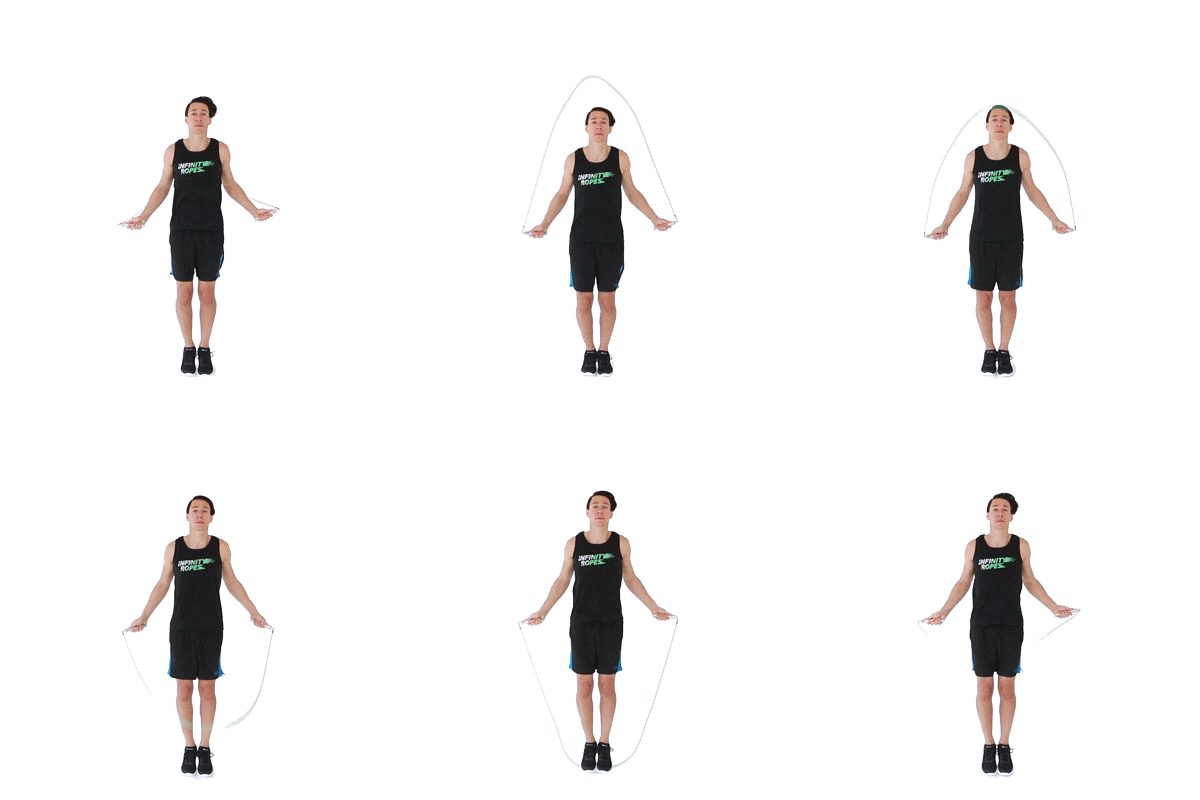
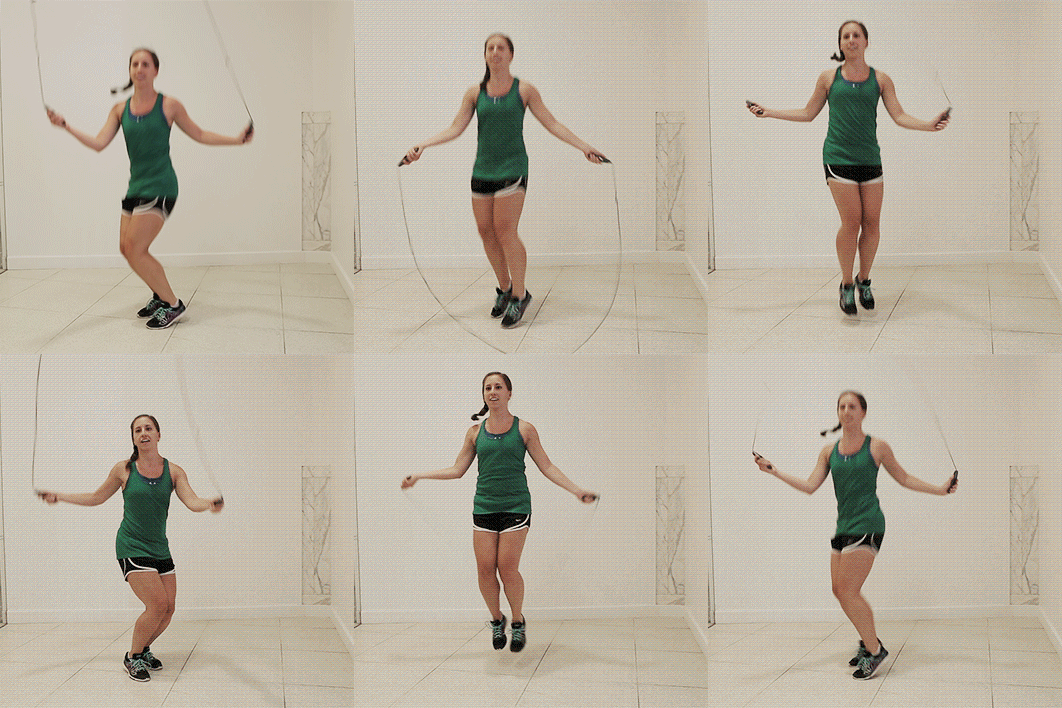
Jump with both feet slightly apart over the rope. Beginners usually master this technique first before moving onto more advanced techniques.
https://wodprep.com/blog/single-unders/
One leg hops - Double Single Foot Jumps
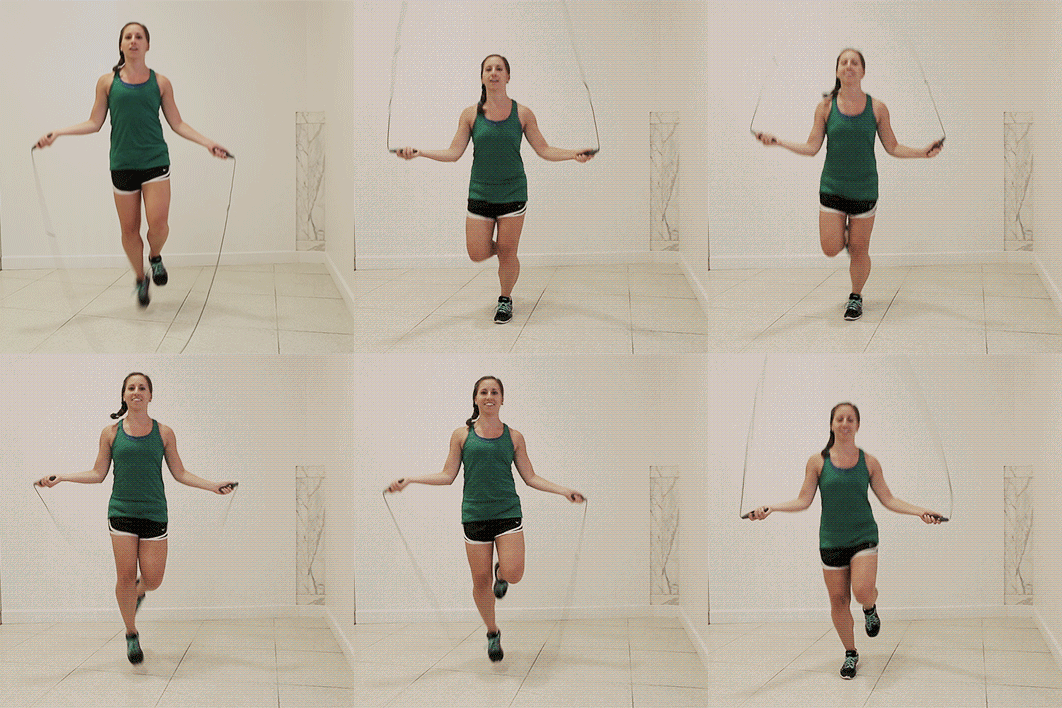
One-leg hops are exactly the same as two-leg hops, but they’re performed on a single leg. This requires extra balance and coordination (as well as serious calf strength). So, rather than jumping for the full 30-second interval on a single leg, try performing five hops on one leg, then five hops on the other leg, switching legs every five hops for the duration of the interval. Be extra careful about protecting your knees when doing one-leg hops. Keep your hops as low as you can, and land lightly on the ball of your foot with your knee and hips slightly bent. Keep your knee in line with your toes.
Once you get the single under down, try hopping on one foot. To really test your balance, jump twice from the same foot. An example beat would go left foot, left foot, right foot, right foot, with one rope revolution between.
Kick Out Jumps
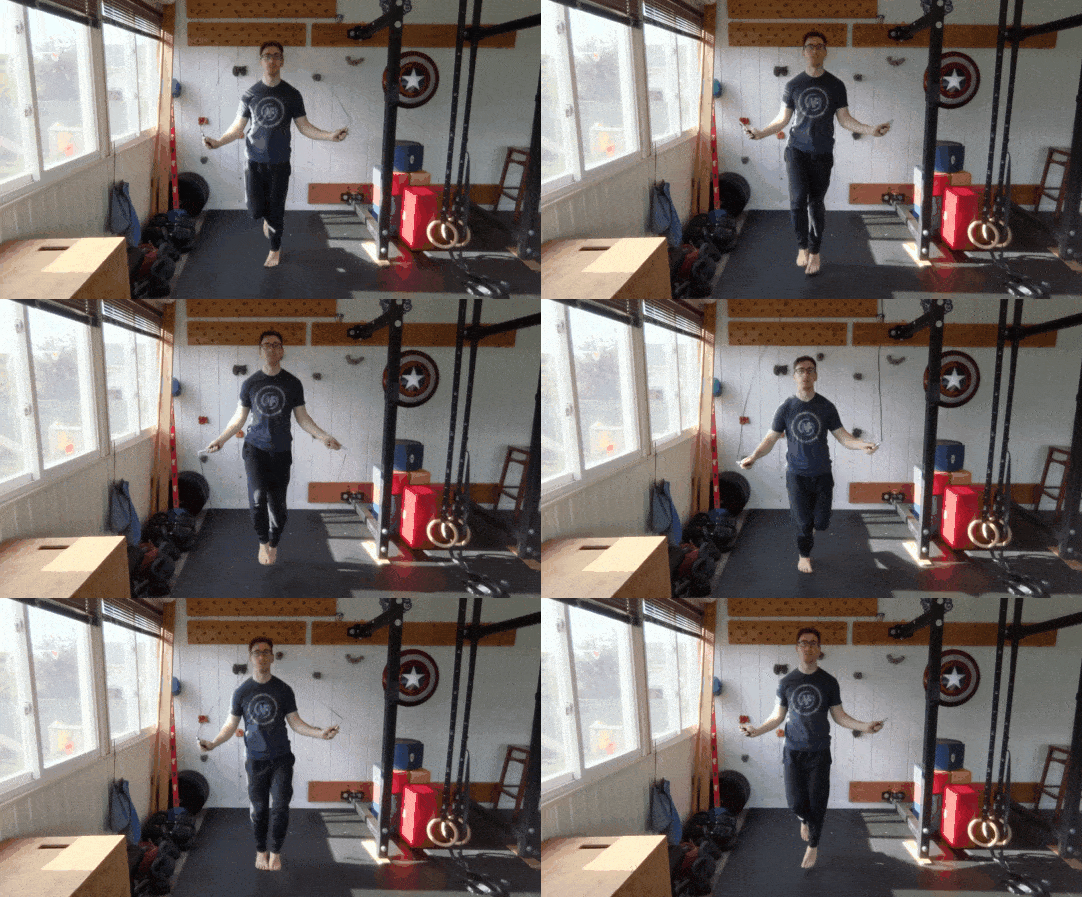
Here, you’ll alternate taking one foot forward every jump.
So while your left is down, your right foot will be kicking out.
You’ll hop and switch feet between rope revolutions. This is trickier than it looks.
Half and Full Twist - Twist Jumps
It is a fun variation of the basic jump, and you can enjoy the fun it brings. However, before starting, ensure you already got the motion and rhythm; ensure you already have the rope.
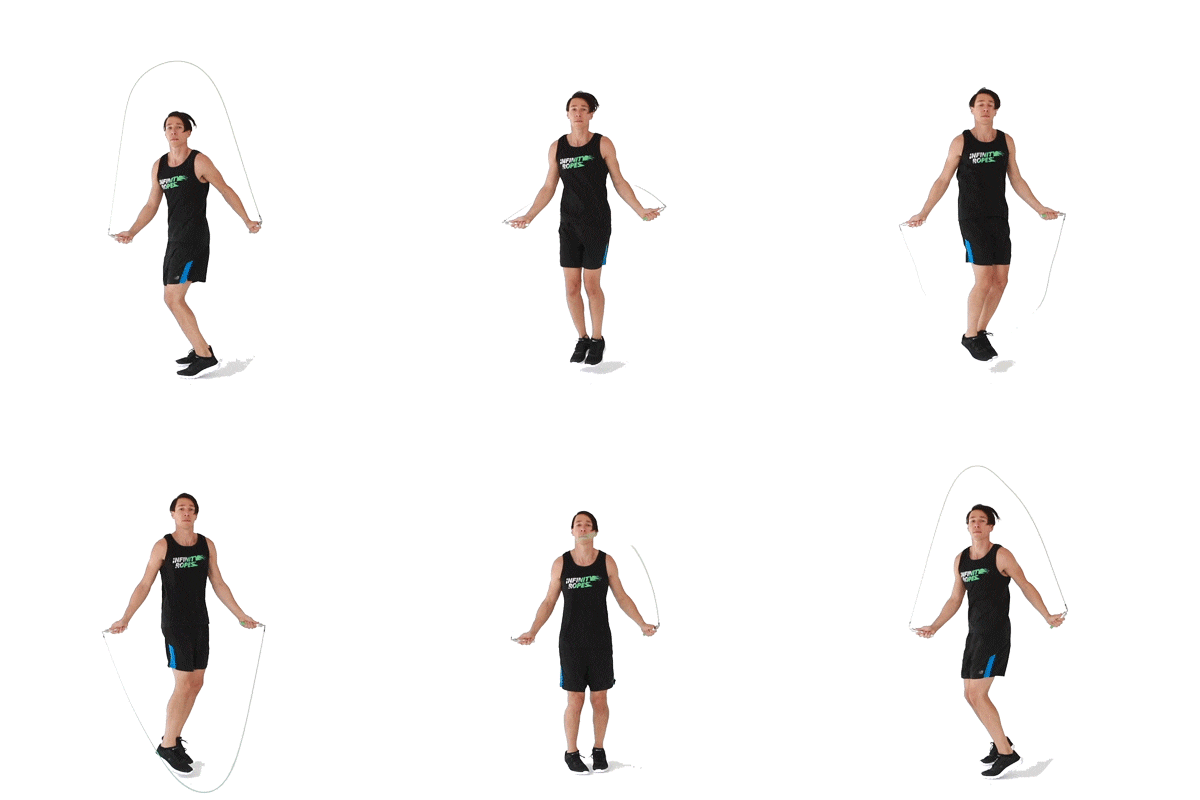
This jump rope exercise is all about rotating your torso. Your feet will jump together, but will be rotating about 180 degrees from left to right, twisting from your hip. Your shoulders will stay firm, which will keep the rope in place.
Half twists
Full twists
Side swing
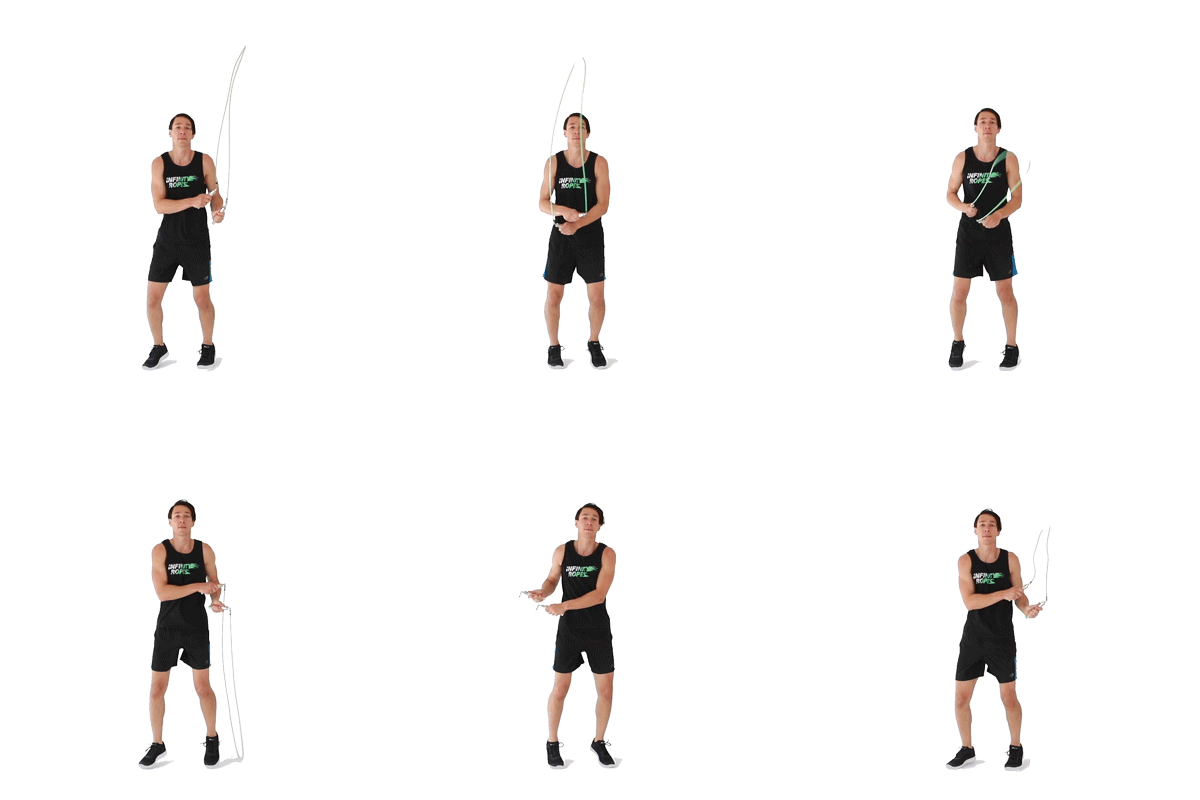
No jumping is required with this trick.
The rope is passed by the side of the participant’s body without jumping it.
The Side Swing is the perfect move to transition between jumping rope and resting.
Bring both wrists together—not touching—in front of your body at hip level. Then, move your hands in a figure-eight motion to swing the rope from side to side. Simply swing the rope to either side of your body to maintain your rhythm between tricks.
Jump Rope Figure 8
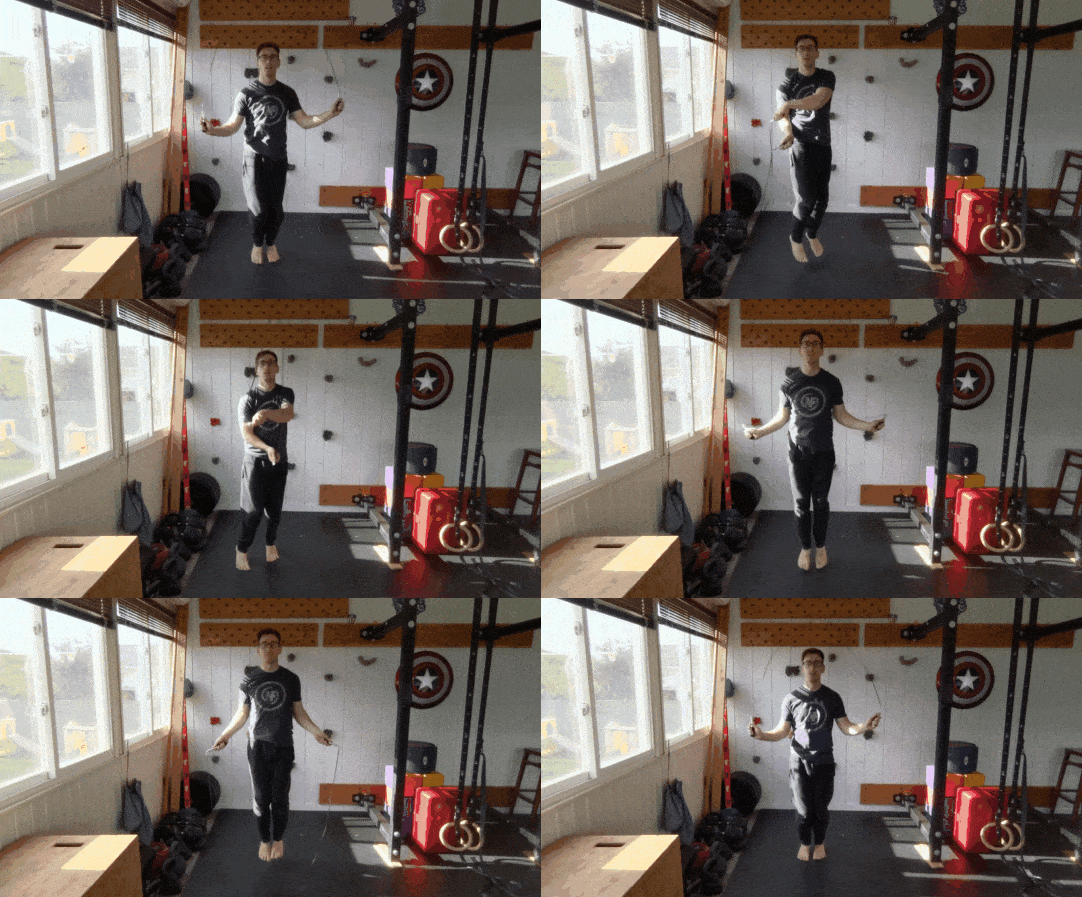
This exercise has you doing four normal hops, followed by four twist jumps.
Here’s the fun part: when you rotate, bring your arms together and have the rope do a revolution on the side you’re twisting away from. Alternate to the other side, combining your twist, hop, and whip.
Don’t feel bad if this takes some practice. This is starting to get into the “jump rope tricks” territory.
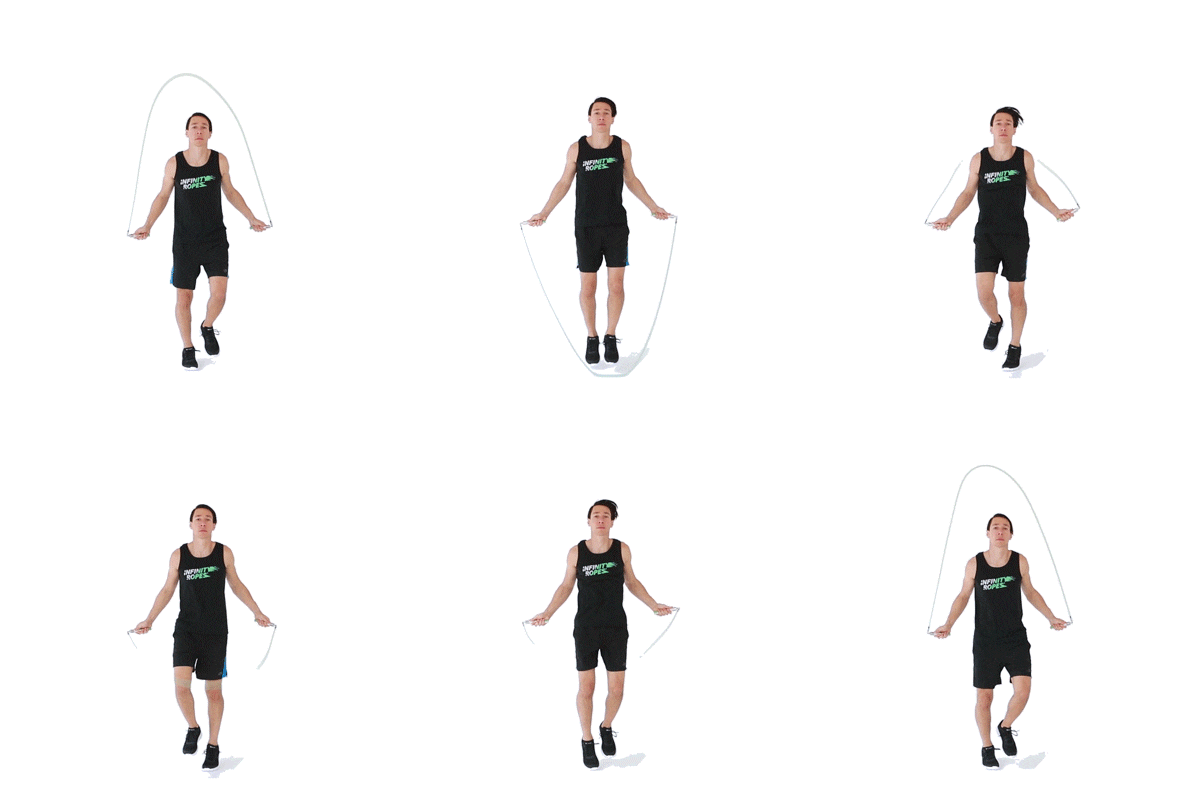
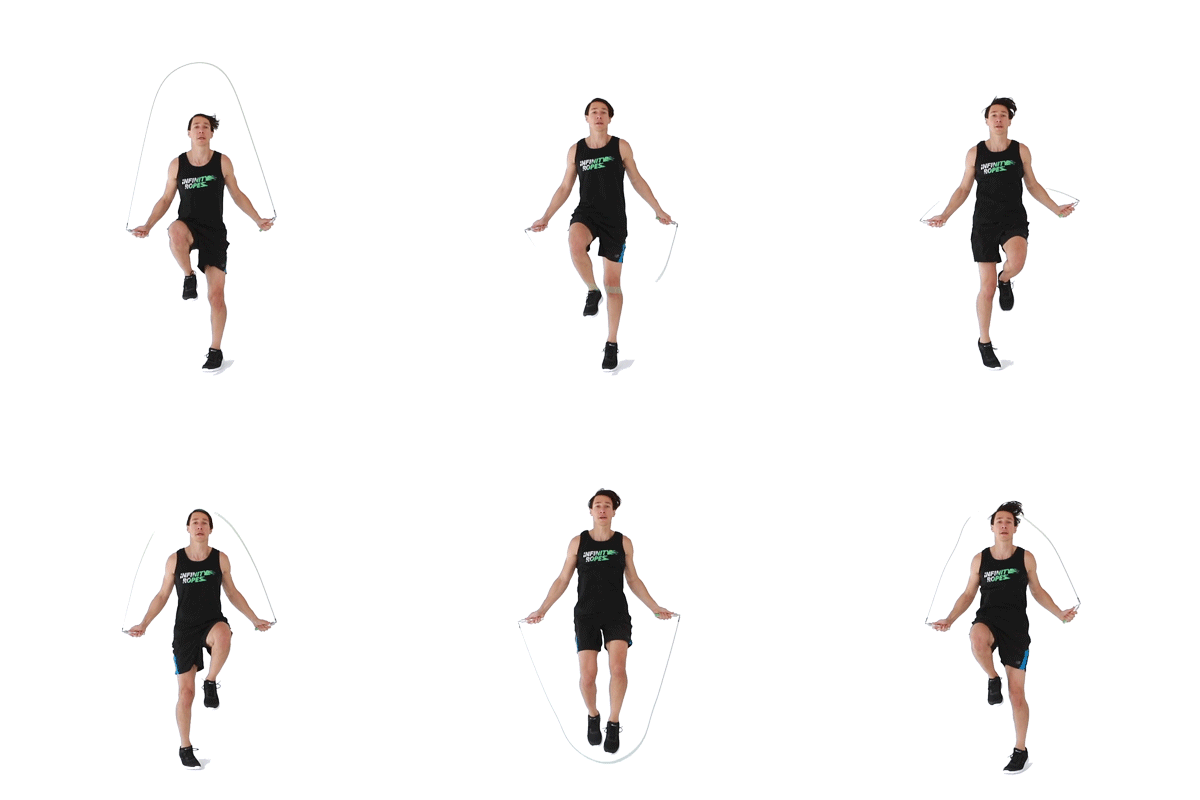
Alternate foot steps - Speed Step
Use alternate feet to jump off the ground. This technique can be used to effectively double the number of jumps per minute as compared to the above technique. This step can be used for speed events.
Jump Rope Jog
Start in the same basic position with your feet together, knees and hips slightly bent, and the jump rope behind your feet. As you swing the rope behind you and over your head, lift your right foot as if starting to jog, and as the rope twists in front of you and nears your left foot, hop it into the air, switching foot position so your right foot touches down as soon as the rope passes under it and your left foot lifts into the air. With each turn of the rope, you’ll continue this jogging action, switching which foot is in contact with the ground.
High Knee Jump
Hold the ends of the jump rope in each hand. With your feet shoulder width apart, slightly bend your knees, and raise one knee high while the rope goes under your foot. On the next revolution of the rope, raise the other knee as if you were running in place.
Alternate jumping from one leg to the other with your hops. The trick here is to bring your knees up high as you do so.
Butt Kicks
These are much like your high knees, but in reverse, as you’re trying to bring your foot back to the point where it meets your glute (butt). A good counter exercise for your high knees.
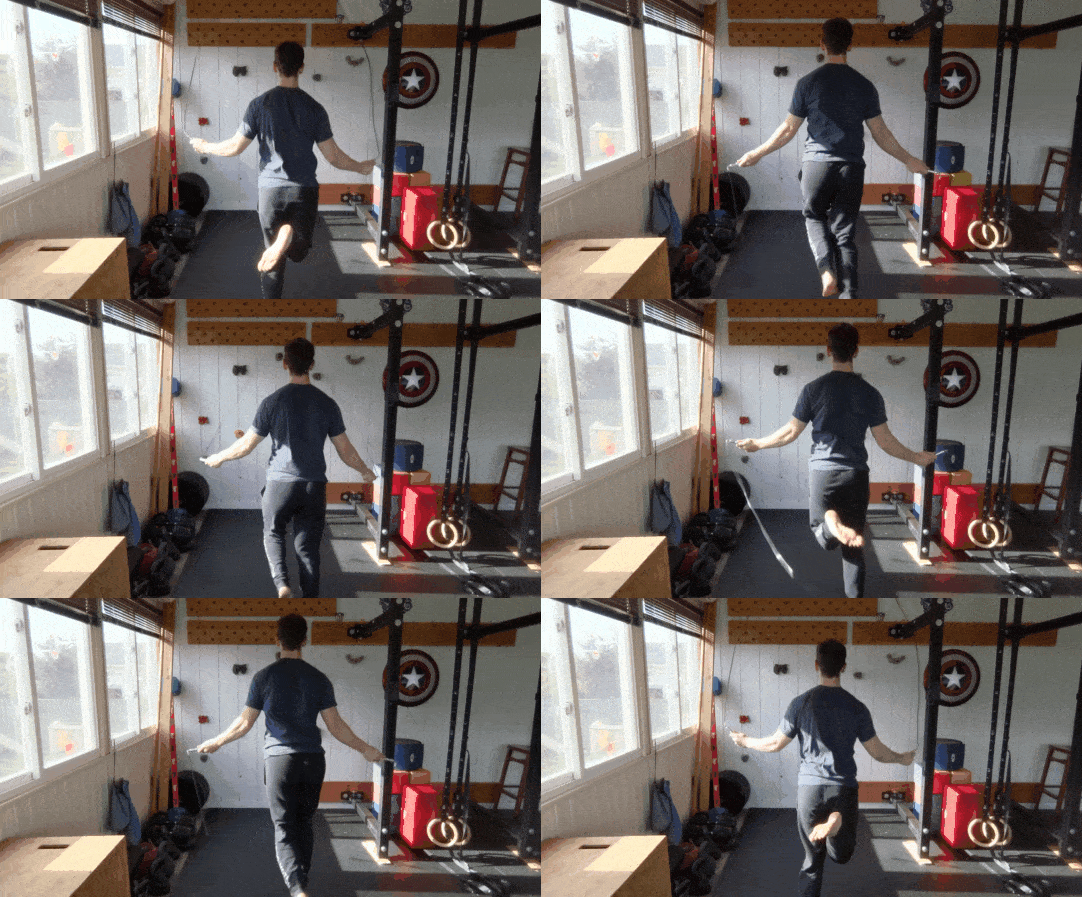
Mummy kicks
The Jump Rope Kicks is similar to alternate side steps. But instead of running in place and lifting one foot up with each turn of the rope, you kick each foot out in front of you, tapping your heel to the ground before switching legs. The rope should pass under your feet when both feet are in the air as you switch foot positions, swinging over your head as your front heel taps the ground.
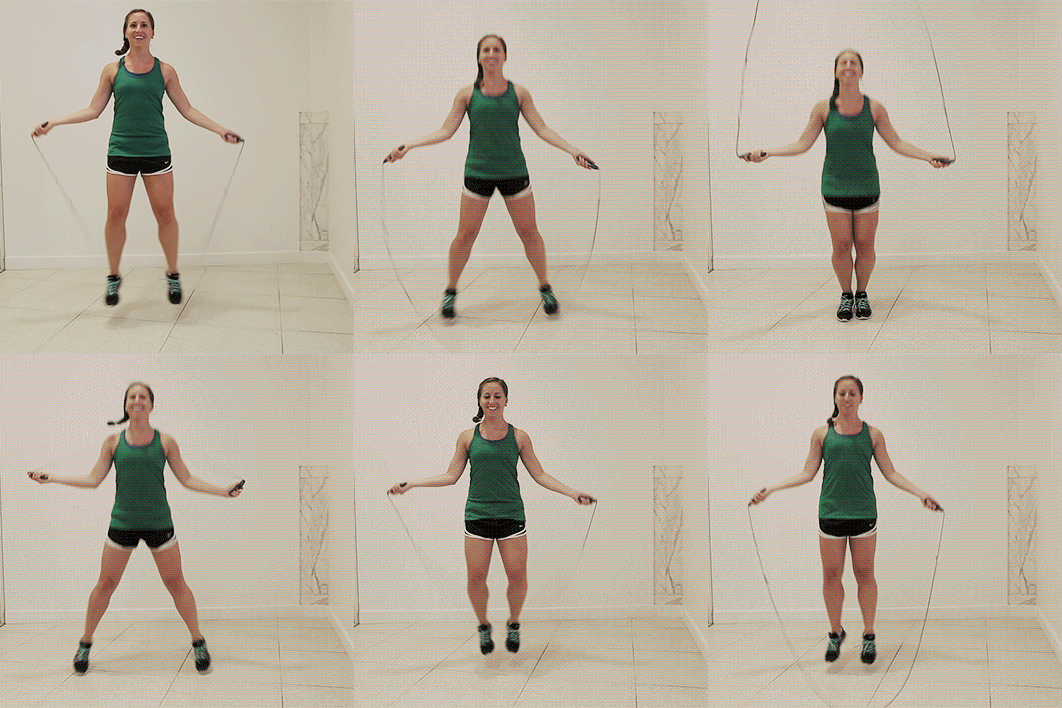
The Half-Jacks
You start by alternating between jumping with your feet together and jumping with your feet wider apart. Before you start, you have to return to your standard jumping pattern. Ensure you keep light on your toes and be careful not to move your feet so wide that the catch on the sides of the rope as it rotates.
Scissors - Shuffle - Strides
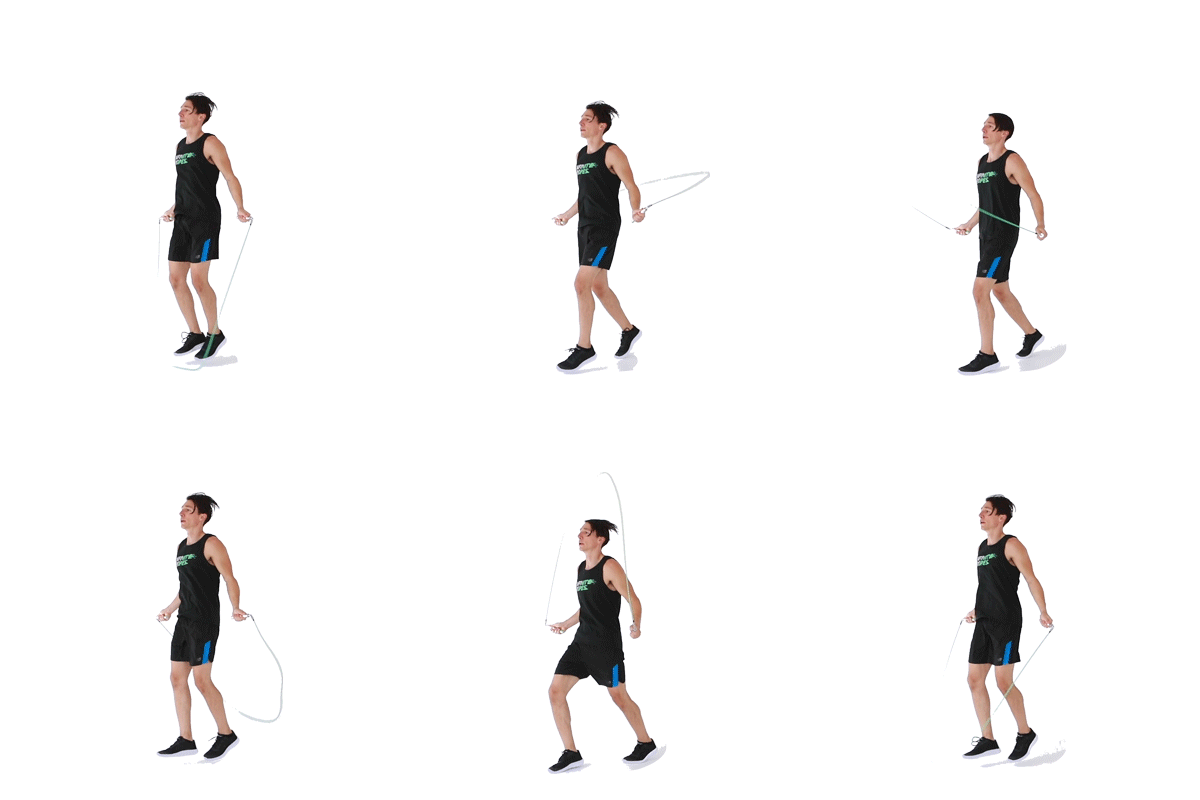
It’s just like it sounds: Your legs perform a continuous scissoring action with each turn of the jump rope. Start with your feet together, and as you spin the rope under your feet for the first time, jump your legs up, and scissor them so your right foot lands in front of your body and your left foot lands behind. On the next jump, alternate your leg position, scissoring them so your left foot lands in front of your body and your right foot lands behind.
The feet will land together, but one leg will be in front and the other will be behind. You’ll alternate leg positions between jumps, in a scissor-like motion.
The Skier Step - Skiers
https://www.youtube.com/watch?v=pwChCKLLwN8
The jump rope skier is a beginning step that involves jumping from side to side. The jumps can be big or small; you can move forward or backward in a zig zag fashion, or stay in roughly the same spot. It’s a great jump for improving agility and does an awesome job at activating your core.
This is a two-footed hop from side to side, imagine you’re jumping over a small log. Throughout the movement, your weight should be distributed evenly on the balls of both feet.
The jump rope skier is one of the more fundamental steps as both feet stay together, but the legs go side to side with a lot of core involvement. Instead of just jumping straight up and down, you’re taking your legs side to side. If this is new for you, do small jumps, small lateral hops. Try to be mindful of making those jumps the same distance to the left and to the right. Some people tend to be dominant with one side of their body and so they may take a huge jump left and a small one right or vice versa, but you’re aiming for consistency. There’s a lot of core involvement and foot involvement. It’s bilateral, so both feet are involved. It’s mermaid position where the legs are close together. You want to push off with both feet at the same time and land with both feet at the same time.
For most people, the skier is fairly comfortable. If there’s a common mistake, it’s probably jumping too high, and too far, and maybe even kicking back the heels. So it ends up looking like you’re jumping over some kind of massive obstacle. It’s very athletic but it’s really not necessary. It’s too much effort. You want to find your groove.
Assuming you found your groove, a great challenge would be to do the skier while backing up, and to do the skier while jumping forward. Those are both really awesome moves. Those would be our two favorite challenges.
You could try rotation with the skier. It’s a little awkward.
But your main options are going to be in place or backing it up and bringing it forward.
This is in the beginning series, along with the basic bounce, and the bell, and the twister.
Backward Jump
Backward jumps are awkward at first, but the movement itself is very basic. It’s just the same two-foot hop you’ve already mastered in Basic Jump. The challenge comes with the direction of the rope spin. In Basic Jump, we start with the rope behind our feet, and spin it up from behind us, then over the head so that it passes from top to bottom in front of us, to under our feet starting at the toe. In Backward Jump, we start with the rope in front of our feet, turning the rope in the opposite direction so that it goes from bottom to top in front of us, then over the head, ultimately passing under your feet starting at the heel. Because we can’t see the rope as it approaches our feet, it is a little tricky to master correct timing. To get the hang of it, slow your pace, and jump slightly higher in the air with each hop. As you grow accustomed to the movement, you’ll become faster and more efficient.
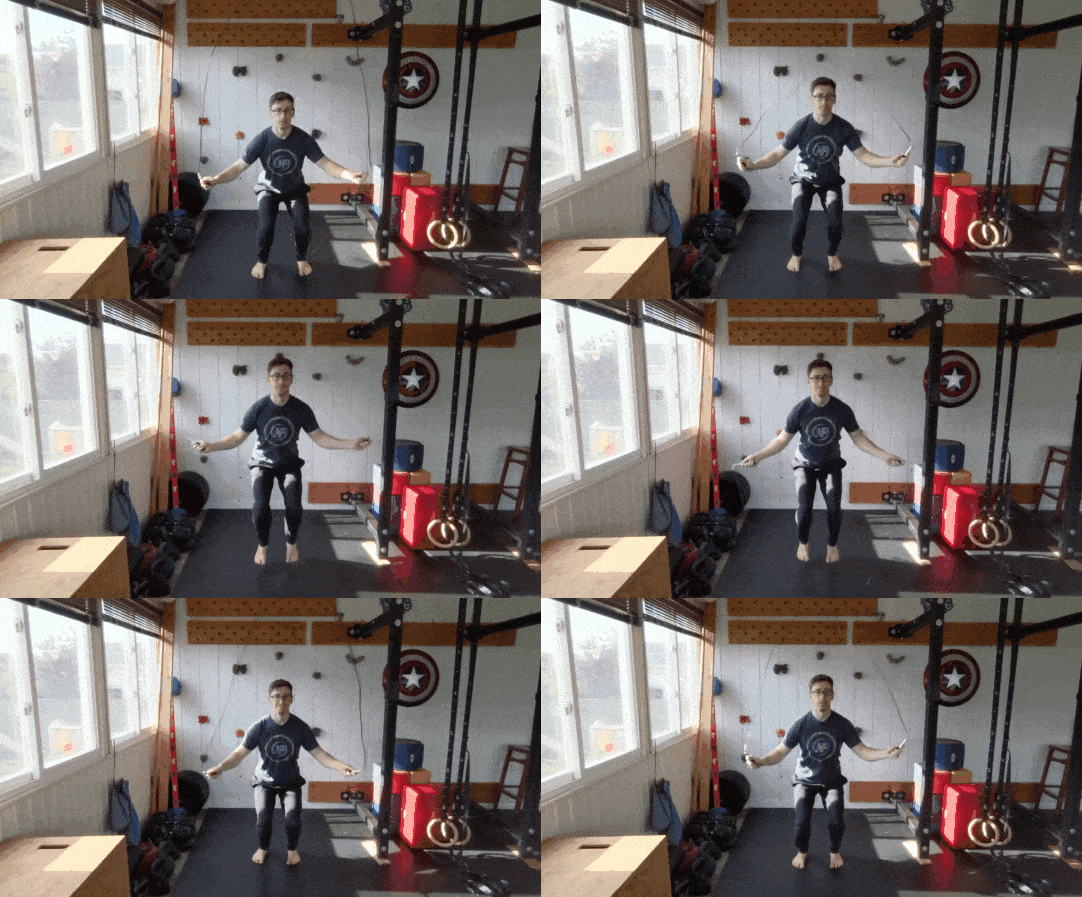
Squat Jumps
If you want to really challenge your lower body, hold a squat position while doing your hops.
Your entire lower body will be engaged for this exercise.
Squat Jacks
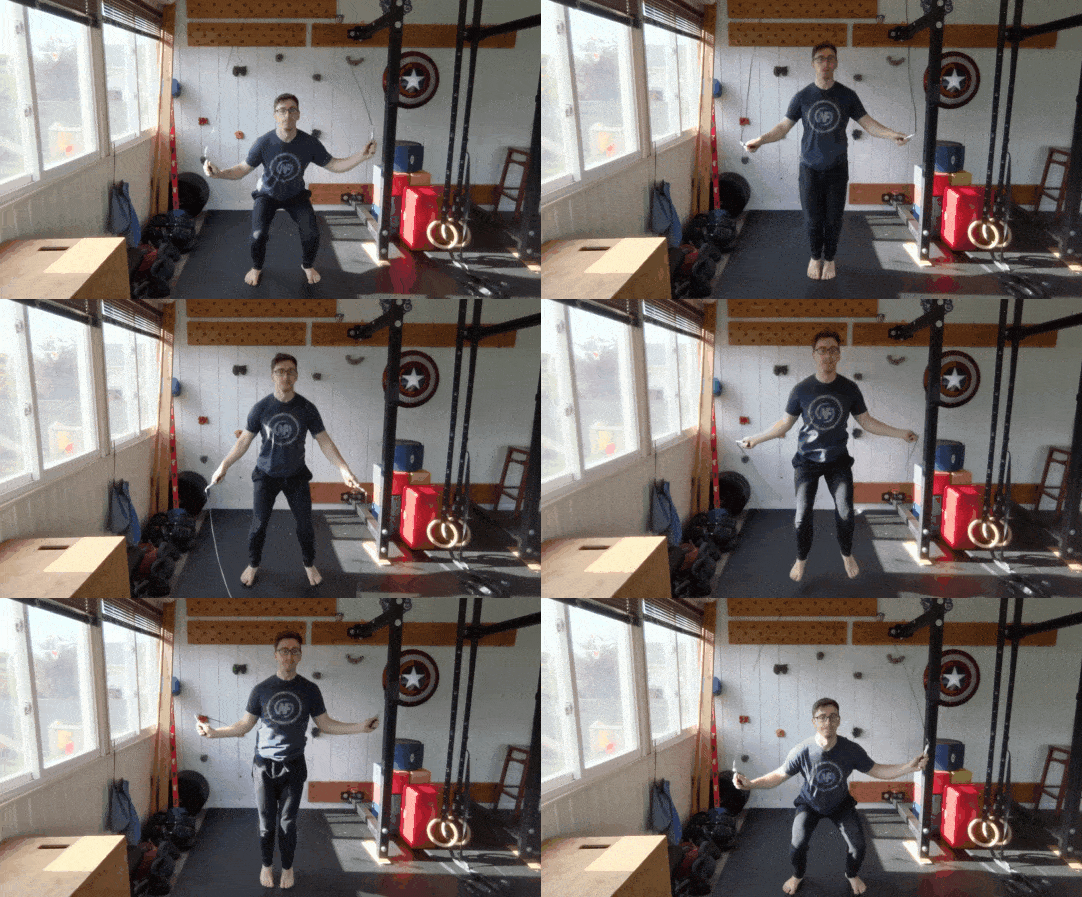
Just like the name would suggest, here we are combining our squat jumps with jumping jacks.
To do it, perform jump rope jacks, but land in a squat position when your legs are kicked out wide.
This will get challenging quickly.
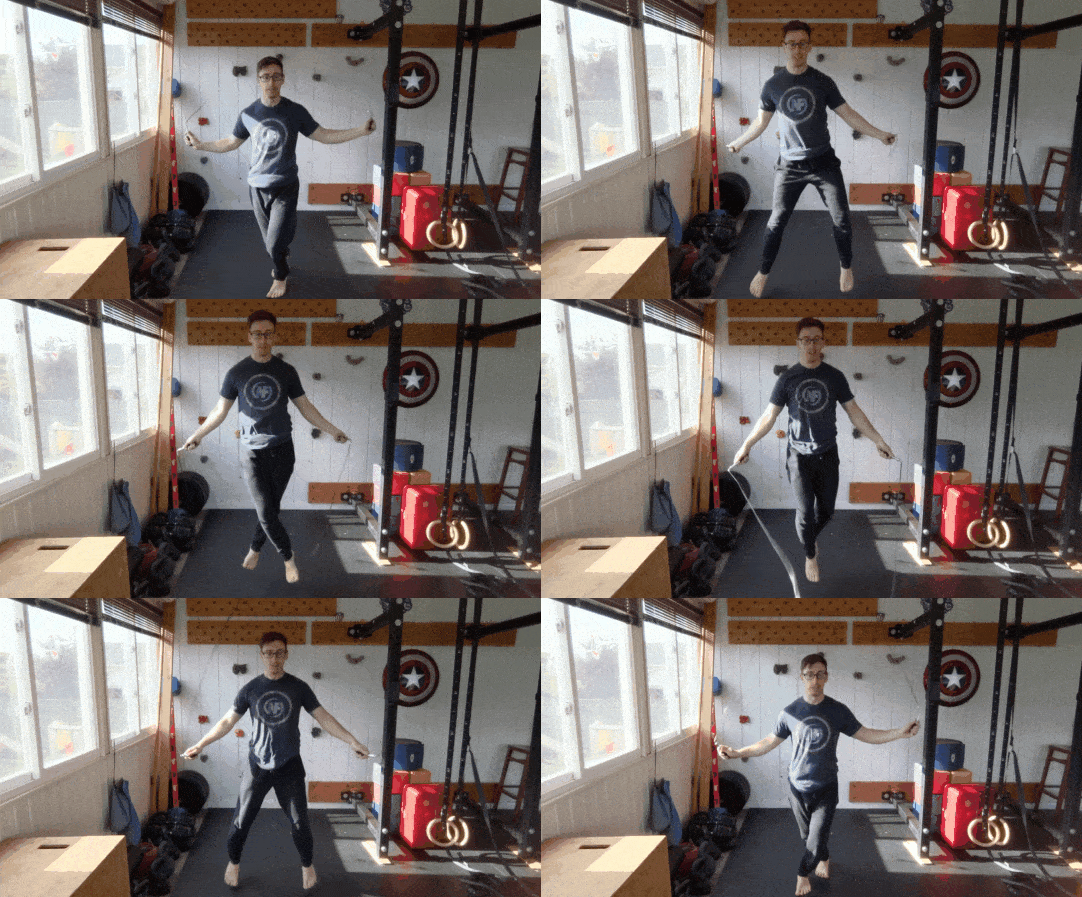
Criss Cross Jacks
These are like jumping jacks, but instead of bringing your feet together, you cross one foot in front of the other.
Your feet will go wide, then left in front of right, then wide, then right in front of left, then wide.
After some practice, you’ll get the coordination down.
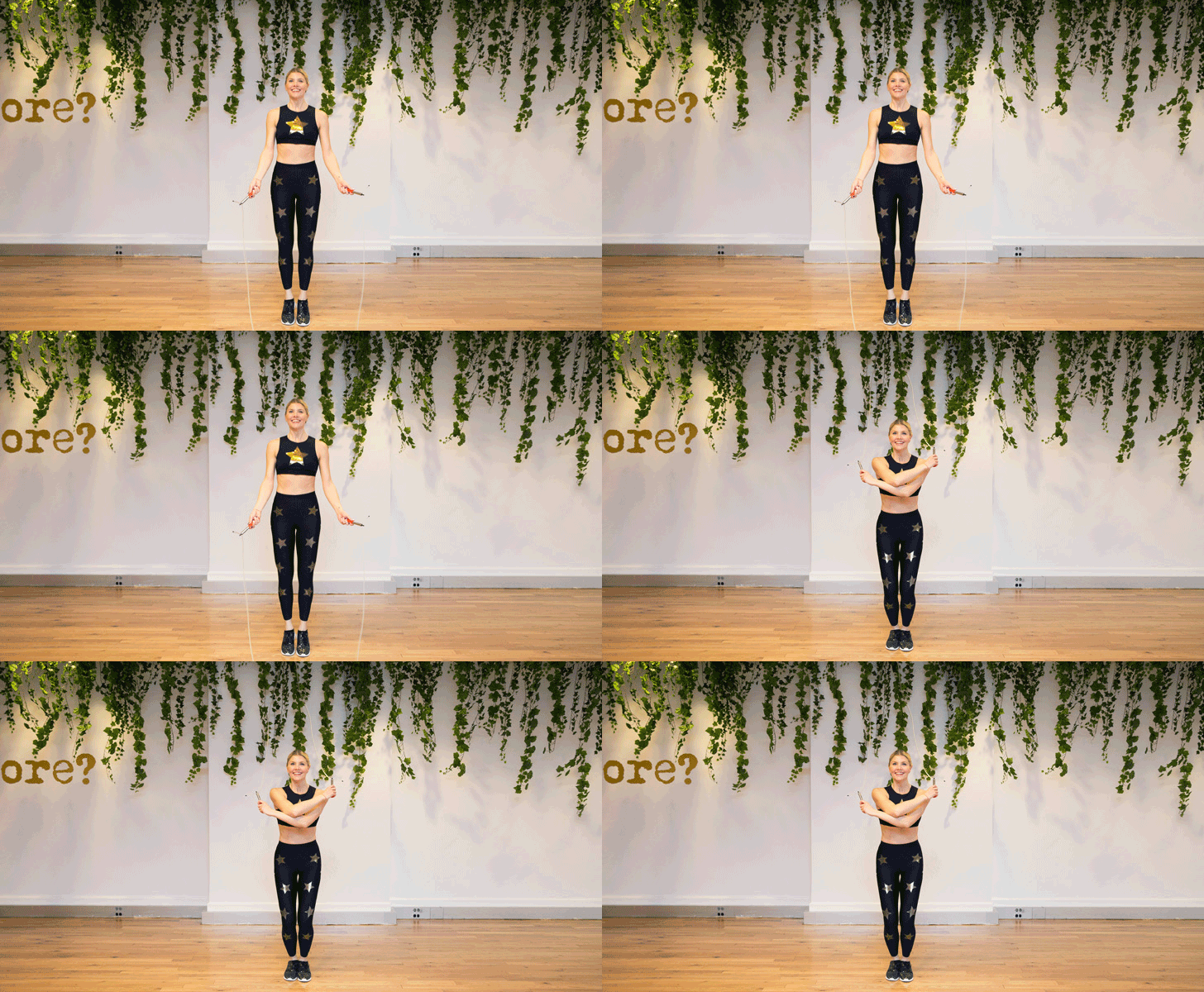
Crossover Single Unders - Criss-cross - Crossover - Cross arms - Cross
Perform the basic jump whilst crossing arms in front of the body.
“To do a cross jump, start with your arms in the regular jump position, elbows bent at a 90-degree angle. Cross your right arm over your left arm so that your elbows meet as if you are giving yourself a big hug. Open your arms back to the starting position. Do three regular jumps and then one cross jump, 16 times through.” https://coveteur.com/2018/08/22/amanda-kloots-rope-class-workout-moves/
TODO
- https://wodprep.com/blog/guide-crossover-single-unders/
- How to Criss Cross Jump Rope https://elitejumps.co/blogs/guides/how-to-criss-cross-jump-rope
- 5 Jump Rope Crossover Variations https://elitejumps.co/blogs/guides/jump-rope-crossover-variations
The Penguin Drill
https://wodprep.com/blog/single-unders/
The penguin drill, often referred to as penguin claps, is when you simply jump in place and at the apex of your jump, tap your hips twice with your hands - like you are doing a Double Under. That’s it. You’re not even holding a jump rope.
Much like the air squat being the king of all squatting movements, the penguin clap is an unloaded movement with all the components of the double under built in. It trains tempo, timing, jumping and even hand position.
https://www.youtube.com/watch?v=AQANZzMOdDo&t=154s
Double Under
A high basic jump, turning the rope twice under the feet. Turning the rope three times is called a triple under. In competitions, participants may attempt quadruple (quads) and quintuple under (quins) using the same method.[citation needed] The guinness world record currently belongs to Kirato Hitaka, who has managed to do 8 revolutions in one jump.[6][7]
TODO
- 10 Common Double Under Mistakes and How to Fix Them https://elitejumps.co/blogs/guides/double-under-mistakes-and-how-to-fix-them
- How To Improve Your Double Unders With A Speed Rope https://elitejumps.co/blogs/guides/how-to-improve-your-double-unders-with-a-speed-rope
- Mastering Double Unders: The Right Technique https://elitejumps.co/blogs/guides/mastering-double-unders-jumping-and-landing-technique
- Why Double Unders are the Ultimate Cardio Workout https://elitejumps.co/blogs/guides/why-double-unders-are-the-ultimate-cardio-workout
- A Simple Experiment to Improve Your Double Unders https://elitejumps.co/blogs/guides/experiment-to-improve-double-unders
- 5 Beginner Double Under Jump Rope Skills https://elitejumps.co/blogs/guides/5-beginner-double-under-jump-rope-skills
- Mastering Double Unders: Proper Hand Placement https://elitejumps.co/blogs/guides/mastering-double-unders-proper-hand-placement
- Mastering Double Unders: How to Find Your Rhythm https://elitejumps.co/blogs/guides/mastering-double-unders-how-to-find-your-rhythm
- Mastering Double Unders: Sizing Your Jump Rope https://elitejumps.co/blogs/guides/mastering-double-unders-how-to-size-your-rope
- How to Pick a Rope for Double Unders https://elitejumps.co/blogs/guides/mastering-double-unders-choosing-the-right-rope
- 9 Tips for Quicker Double Under Mastery https://elitejumps.co/blogs/guides/9-tips-for-quicker-double-under-mastery
- Proper Rope Sizing for Double Unders https://elitejumps.co/blogs/guides/jump-rope-length-for-double-unders
Triple Unders
https://wodprep.com/blog/master-triple-unders-guide/
Double Under Cross
- How to Master the Double Under Cross https://elitejumps.co/blogs/guides/how-to-master-the-double-under-cross
EB (front-back cross or sailor)
Perform the criss-cross whilst crossing one arm behind the back.[citation needed]
Boxer jump
One foot is positioned slightly forward and one foot slightly back. The person positions their bodyweight primarily over their front foot, with the back foot acting as a stabiliser. From this stance, the person jumps up several times (often 2-3 times) before switching their stance, so the front foot becomes the back foot, and the back foot becomes the front foot. And so forth. An advantage of this technique is that it allows the back leg a brief rest. So while both feet are still used in the jump, a person may find they can skip for longer than if they were using the basic two-footed technique.
Triple Under
- How To Master Triple Unders: A Step-By-Step Guide https://elitejumps.co/blogs/guides/how-to-master-triple-unders
Toad
Perform the criss-cross with one arm crossing under the opposite leg from the inside.
Leg over / Crougar
A basic jump with one arm hooked under the adjacent leg. Doing Crougar with the non-dominant leg in the air is easier
Awesome Annie
Also known as Awesome Anna or swish. Alternates between a leg over and a toad without a jump in between.
Inverse toad
Perform the toad whilst one arm crosses the adjacent leg from the outside.[citation needed]
Elephant
A cross between the inverse toad and the toad, with both arms crossing under one leg.[citation needed]
Frog or Donkey kick
The participant does a handstand, returns to their feet, and turns the rope under them. A more advanced version turns the rope during the return to the ground.[citation needed]
T
A triple-under where the first ‘jump’ is a side swing, the middle jump is a toad and the final jump in the open.
Different Rope Types
For those who are interested, here is Buddy Lee’s comparison of different rope type: http://imgur.com/a/bOhfH